 Shruti Kaushik
Klype can support lead generation by connecting your business context, buyer research, useful content and a focused outreach plan. You still need real evidence, verified prospects and a relevant offer. It does not guarantee leads or sales.
One buyer question, one evidence-backed resource and a small, measurable conversation test.
- A specific service and buyer
- Five to ten attributable observations
- A place to record replies and next actions
Why this gets difficult
More content does not automatically create more demand. If a post answers a question your buyers never ask, making it longer or more polished rarely solves the problem. Research gives the content a job before you start writing it.
A lead-generation workflow also needs boundaries. Research, distribution and outreach are different tasks. Combining them in a plan is useful, but a generated recommendation should not be mistaken for completed research or a message already sent.
A practical example to adapt
Write a viral post that brings high-quality leads to my agency.
Help a small subscription-skincare founder check whether their product page explains delivery frequency, cancellation and first-order expectations. Use the supplied observations; offer our actual one-page checklist.
The second brief gives the reader a recognisable decision and the writer an honest resource to offer. It does not require invented results or an unsupported promise of growth.
Follow the workflow, screen by screen
Use these screens as a map, then apply the example to your own workspace. Each step explains what to look for, not just which page to open.
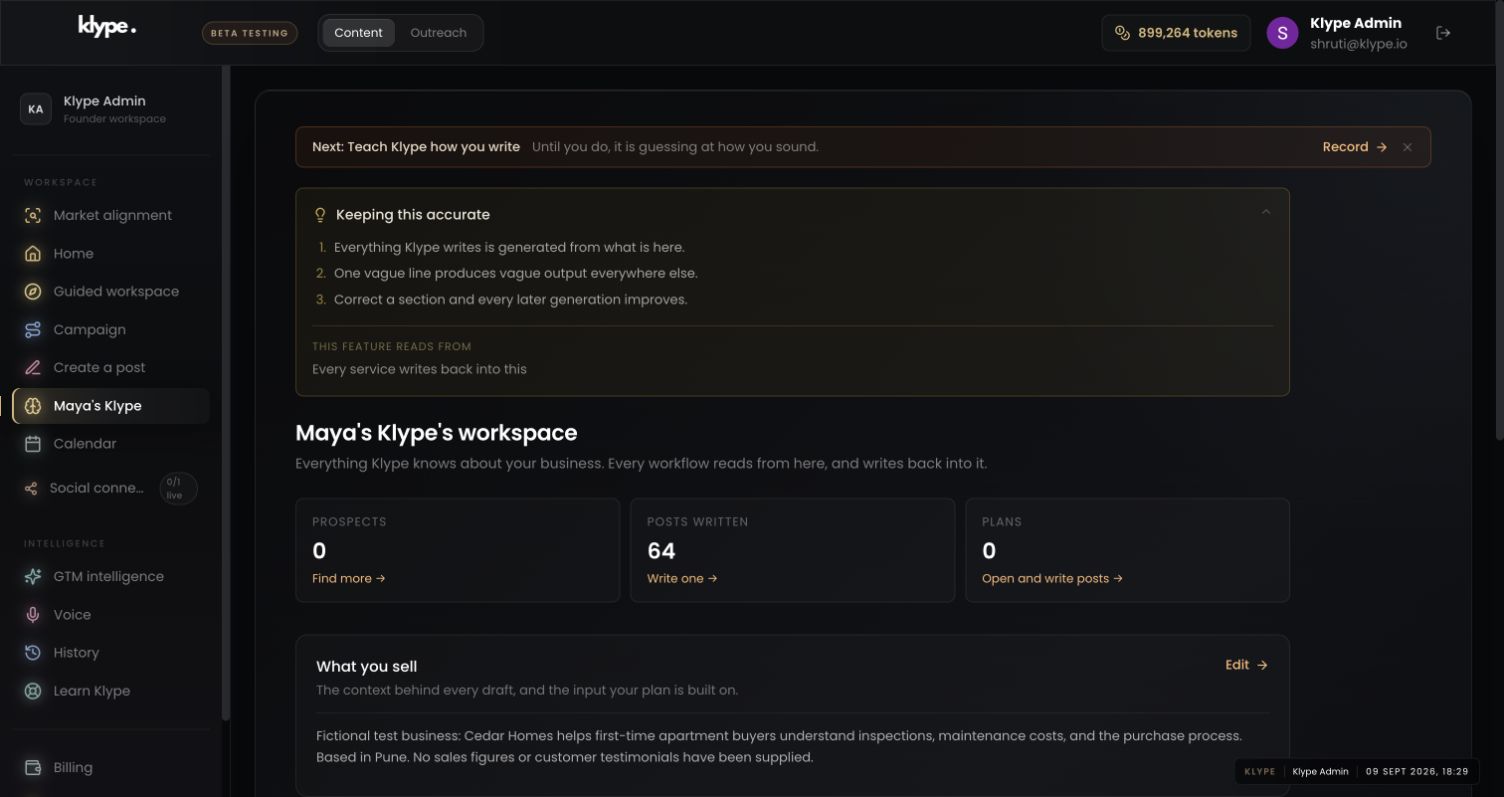
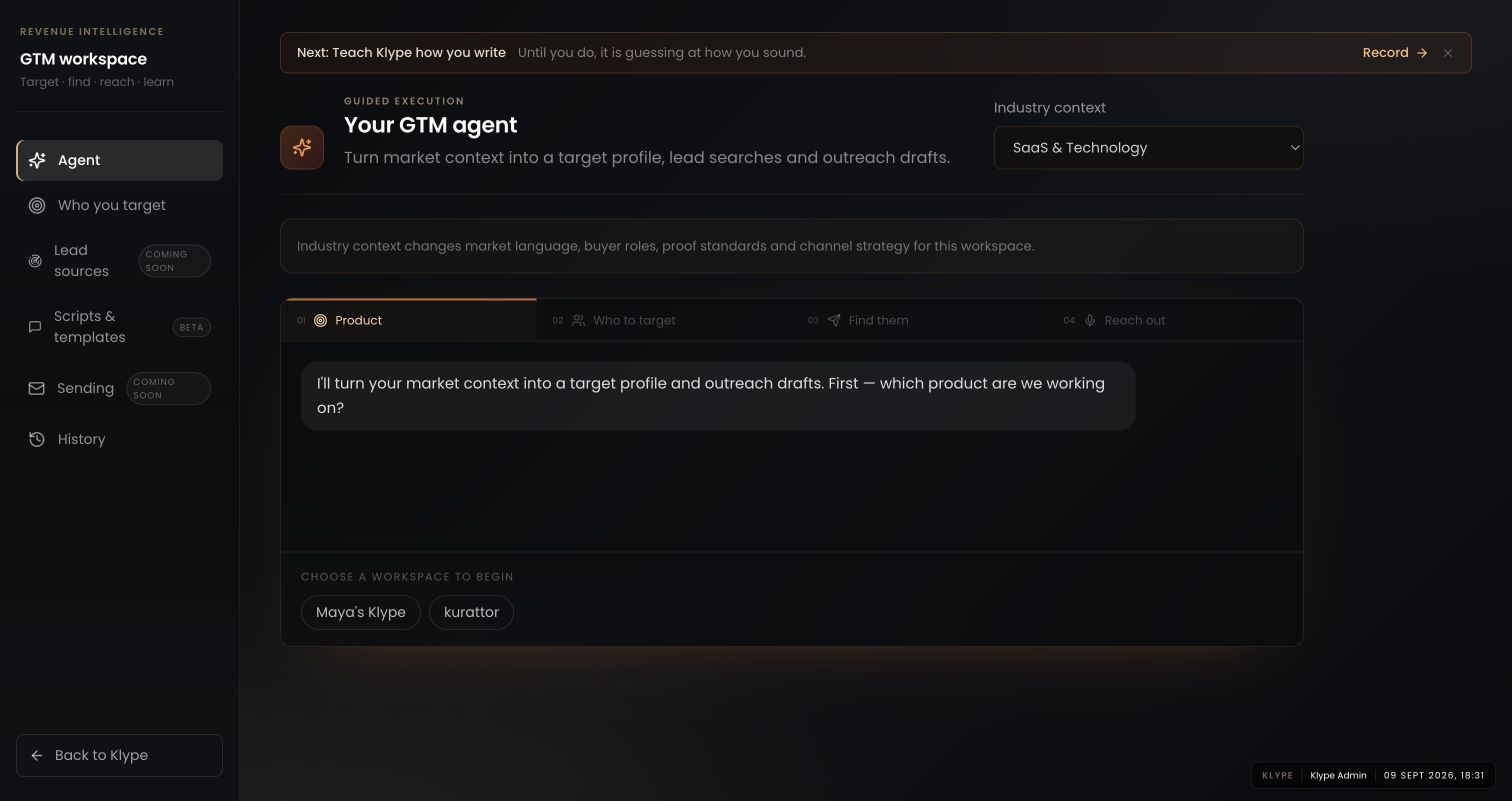
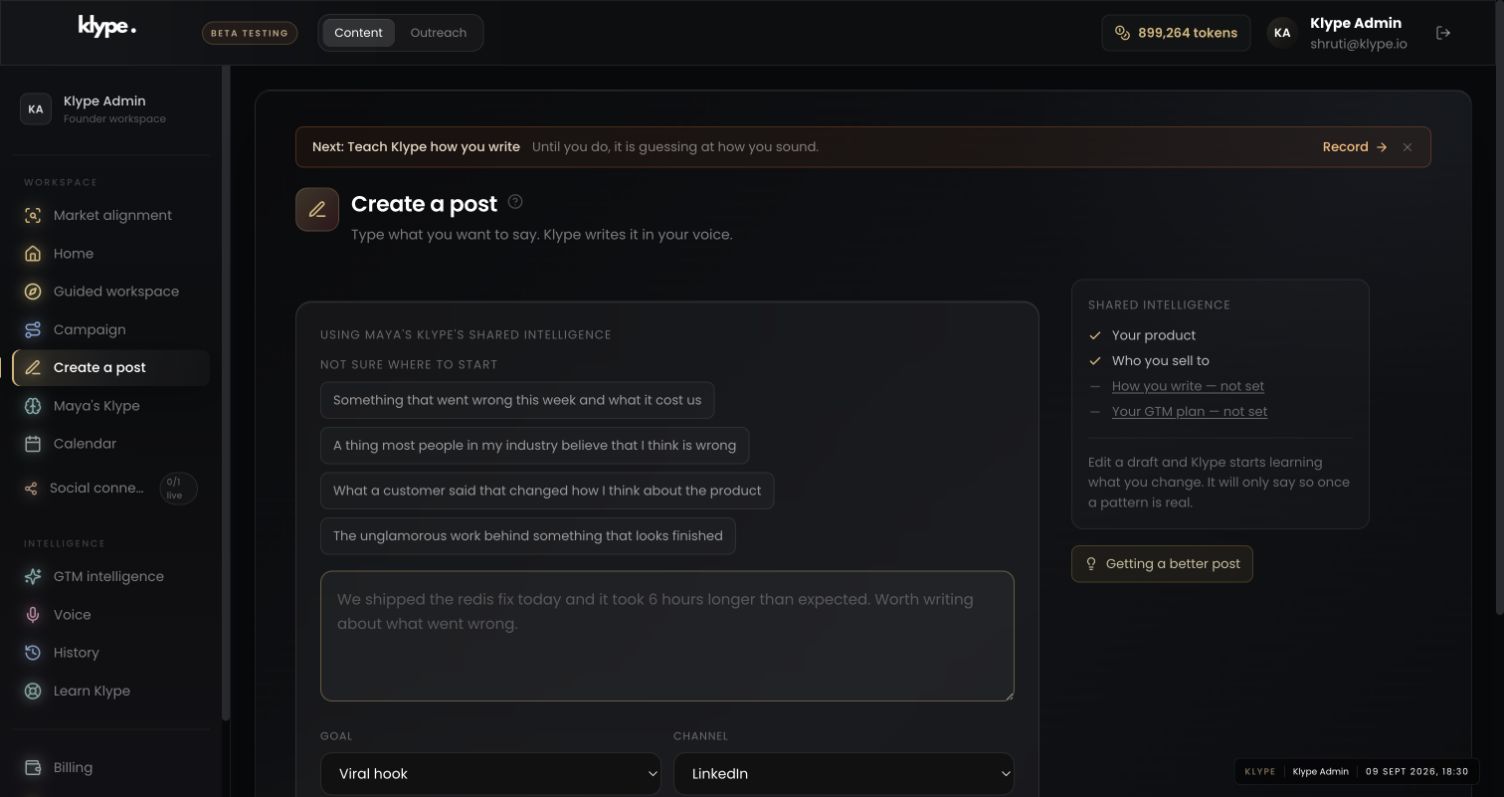
Real product captures from 9 September 2026, using the fictional Maya / Cedar Homes test workspace. These show the interface, not the article’s example being generated. The admin balance is not a plan allowance. Select a screenshot to inspect the full image, including the sidebar.
01Check the business context
Save the service, buyer and boundaries in the business workspace. Check that old positioning does not describe a different offer.
02Connect the idea to a plan
Use the GTM area to plan the research question and route to a conversation. Treat suggested findings as hypotheses until you have evidence.
03Give the draft one clear job
Give Create a post the checked finding and resource. Review the opening, factual claims and invitation before publishing through an available channel.
Buyer: [role and business]. Decision: [specific purchase question]. Evidence: [checked sources, dates and limitations]. Offer: [resource that exists]. Draft one useful explanation and a permission-based invitation to receive the resource. Do not invent buyers, findings or results.
Replace these example details with your own facts. This is a starting point, not a promise of a particular output.
Choose a problem close to a purchase
Start with a question someone asks before spending money. A skincare founder may need to understand why shoppers hesitate at a subscription offer. An agency may need language for a client’s unfamiliar category. These are narrower and more commercially useful than “What is trending in marketing?” In your Klype workspace, describe the service you actually sell, the person who approves it, the situation that makes it relevant and what you will not deliver. A research project becomes easier to scope when it has one decision to inform. Do not list every industry you could theoretically serve.
Build a small evidence sheet before asking for recommendations
Collect relevant public material or notes you have permission to use. For each item, record the source URL, publication or collection date, exact observation, audience context and limitation. Separate a customer’s own words from your interpretation. Five reviews from one site can suggest a question; they cannot establish what an entire market believes. Remove personal information that is unnecessary for the analysis. Give Klype the checked observations and ask it to group recurring questions, disagreements and missing evidence. Review the grouping against the originals. The platform can help organise your thinking; it does not make an unverified source reliable.
Turn the finding into an asset someone can use
Use the GTM workspace to connect the finding to one action: a short comparison checklist, a one-page report or a practical article. Then use Create a post for a specific explanation of that asset. The first paragraph should identify the decision, not announce your expertise. Show the observation, explain its limits and offer a reasonable next step. For the subscription example, an asset might compare what a first-time customer needs to know before choosing a replenishment interval. It should be useful even if its reader never buys your service. A sales brochure disguised as research weakens the offer.
Find relevant people without pretending a list is buying intent
Identify businesses through permitted public directories, company websites, relevant discussions or your existing authorised sources. Check whether the person has responsibility for the problem and whether an observable event makes your asset timely. A product launch is evidence of a launch, not evidence of budget or willingness to hire you. Record those unknowns. Klype’s planning and content workflows do not guarantee a live prospect feed, contact enrichment or automated outreach. If a lead source is marked coming soon, use verified information you supply. Never fill an empty contact field with a guessed email and call it validated.
Offer the resource before asking for a meeting
A first message can be simple: “I’m looking at how subscription brands explain delivery intervals. I made a short checklist of the questions a first-time buyer needs answered. Would that be useful?” Replace the example topic with your actual work and only claim you made the asset once it exists. Deliver it when requested. Ask one relevant follow-up question after the recipient has a chance to read it. The paid offer should be the natural extension of the problem they acknowledge, not an abrupt request for thirty minutes. Keep channel rules, consent requirements and opt-outs in the process.
Measure the move from interest to a relevant conversation
Keep a record of people contacted, delivery status, replies, requests for the resource, qualified conversations and paid starts. Write counts alongside rates: two relevant replies from ten delivered messages is more informative than “20% engagement” without a denominator. Do not treat a like, a download or a polite thank-you as a sales-qualified lead. At the end of the test, read the actual replies and decide whether the problem, asset or audience needs changing. Keep the other variables stable for the next small test. The aim is learning that improves your next conversation, not a spreadsheet full of optimistic scores.
Try it with your own work
Choose one buyer problem today. Spend a fixed hour collecting and checking source material, then write down what the material does not establish. This prevents a small sample from quietly becoming a market-wide claim.
Create one resource and show it to a small relevant group through appropriate channels. Record the questions people ask, not just whether they liked it. Use those questions to choose the next article or improve the paid offer.
When the result needs work
Check current feature availability and checkout terms in the app.
Common questions
Does Klype automatically find and contact leads?
Do not assume that. Check the availability of each source and channel. This guide uses information you verify and outreach you review separately.
How many posts do I need before starting?
There is no required number. One useful resource with an appropriate distribution plan is enough to begin a small test.