 Shruti Kaushik
Klype can help prepare LinkedIn content and a connection-to-conversation plan. Start with verified relevance, wait for acceptance, offer a useful resource and review each message. Do not assume automated connection requests or direct messages are available.
A four-stage message plan with a reason to contact someone and a clear stop condition.
- A checked public profile and company context
- One resource you can deliver
- An outreach record with opt-outs
Why this gets difficult
Many outreach messages fail because they ask for time before giving the recipient a reason to care. Better wording helps, but it cannot rescue an irrelevant offer.
An automation-first approach can also hide weak judgement. When the next step depends on what someone said, a fixed sequence is not enough. Keep the person’s response ahead of the software’s schedule.
A practical example to adapt
Thanks for connecting! We help businesses scale. Can I have 30 minutes to show you our solution?
Thanks for connecting. I put together a short checklist for explaining subscription delivery intervals. If that is a live topic for your team, would you like it?
The revised message asks a small, relevant question and makes the resource explicit. It does not assume a buying need or demand a meeting before delivering value.
Follow the workflow, screen by screen
Use these screens as a map, then apply the example to your own workspace. Each step explains what to look for, not just which page to open.
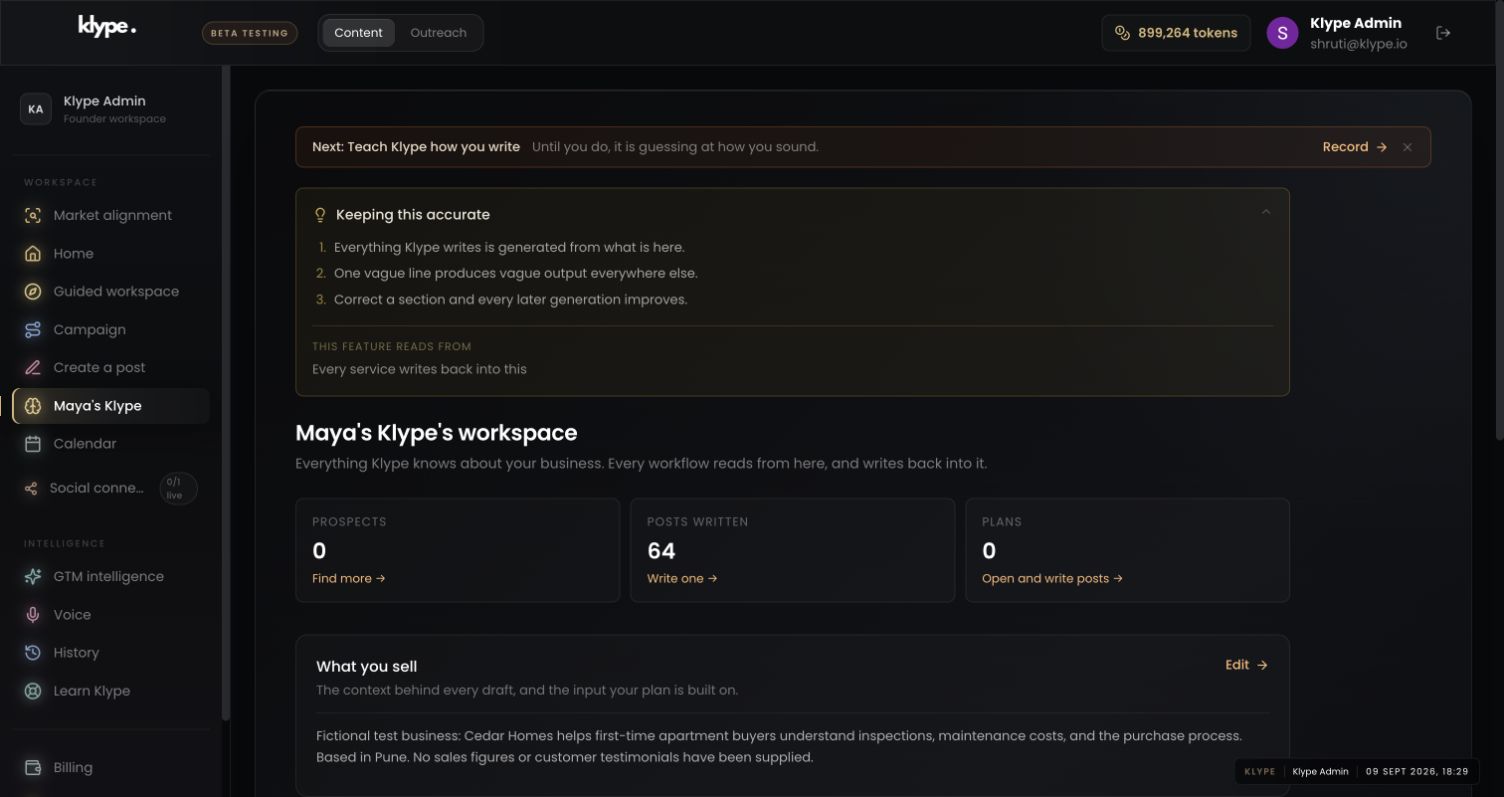
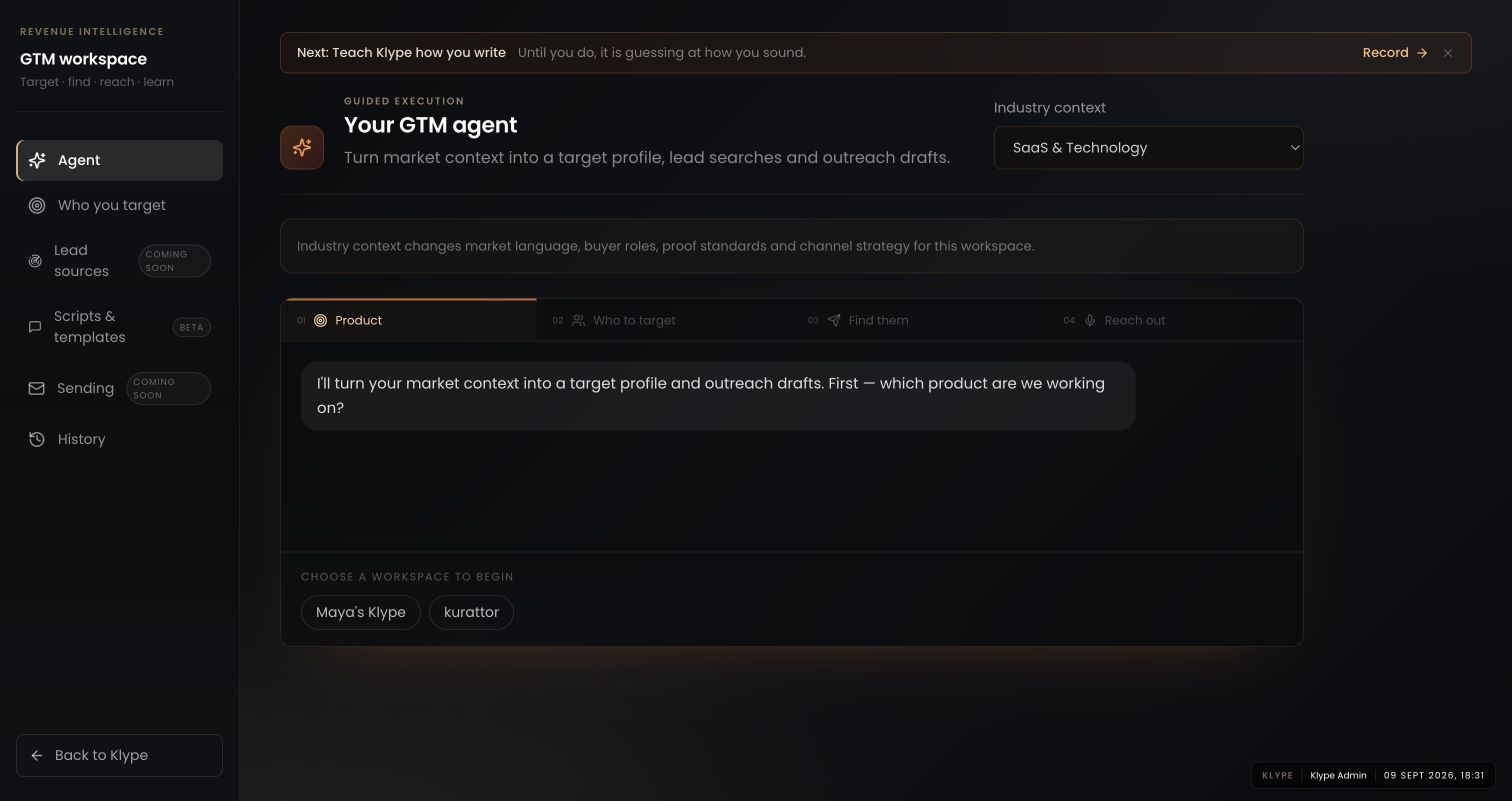
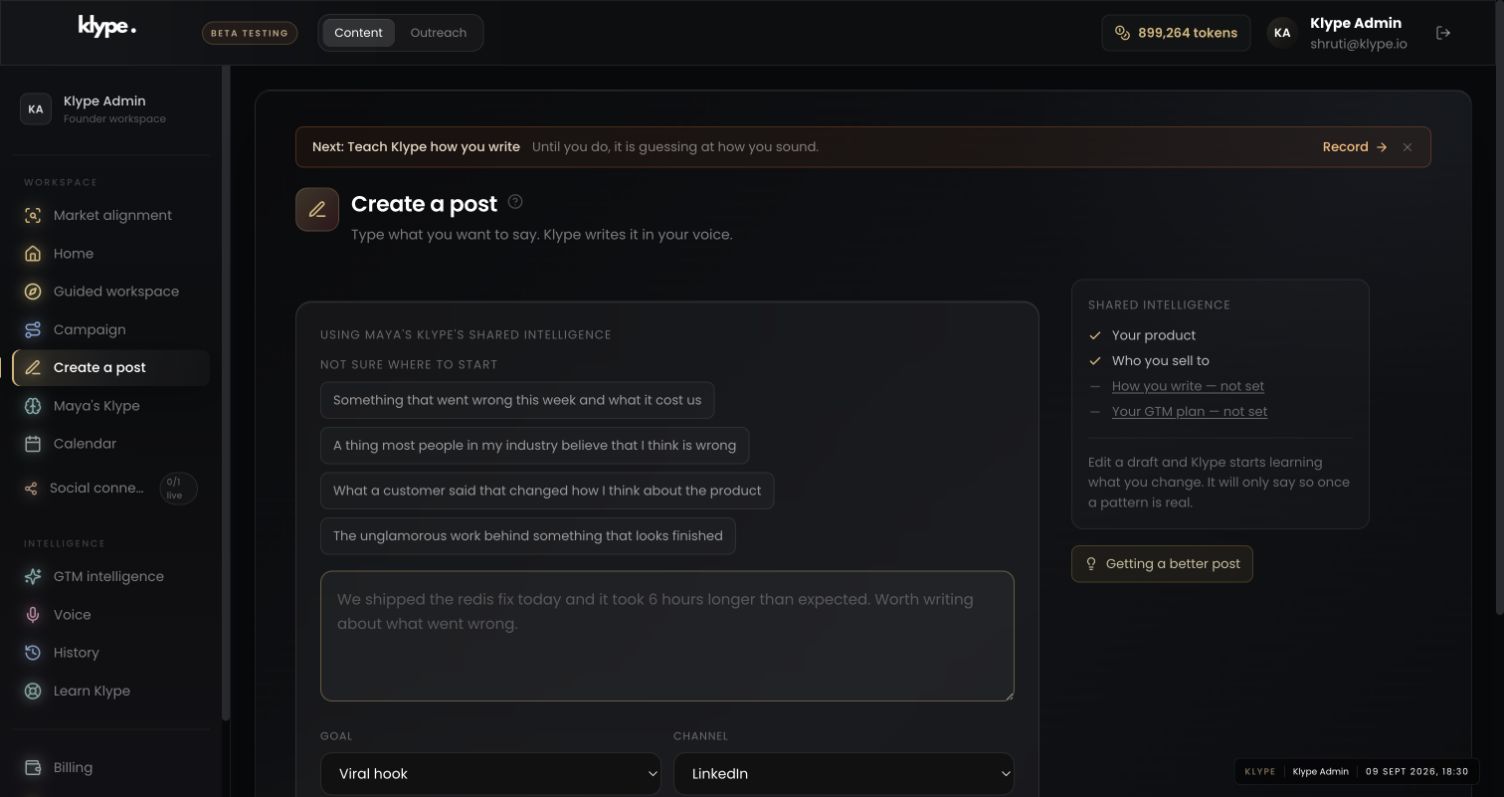
Real product captures from 9 September 2026, using the fictional Maya / Cedar Homes test workspace. These show the interface, not the article’s example being generated. The admin balance is not a plan allowance. Select a screenshot to inspect the full image, including the sidebar.
01Check the business context
Check that the saved audience and service match the person you intend to contact. Remove irrelevant product claims from the brief.
02Connect the idea to a plan
Use the GTM area to organise the conversation stages. If the generated plan gives only generic building blocks, write and review the missing messages before use.
03Give the draft one clear job
Create a supporting post from the same evidence so your profile and outreach tell a consistent story. Publish manually where integration is unavailable.
Prepare a connection note, message after acceptance, resource-delivery note and one useful follow-up. Buyer: [role]. Verified context: [fact]. Resource: [actual asset]. No invented familiarity, urgency, performance claims or automatic sending. Stop after a decline.
Replace these example details with your own facts. This is a starting point, not a promise of a particular output.
Decide who the conversation is for
A relevant connection has more than a matching job title. Look for responsibility for the problem, a business type you can serve and a reason your topic might matter now. Read the public profile and company information before writing. Record what you observed and what remains unknown. A founder posting about a launch may be a sensible person to learn from; that post does not prove they want your service. In Klype, save the audience and offer so message preparation starts from the same commercial context as your content. Do not infer private budgets or personal circumstances from a public profile.
Make your profile support the message
Before outreach, check whether your headline, featured work and recent posts explain the problem you solve. Someone receiving a connection request may inspect your profile before accepting. If your message offers audience research but your profile describes unrelated services, the extra uncertainty works against you. Create one useful post or example that demonstrates the method. You do not need a large audience to show a clear point of view. Avoid treating the number of followers as evidence that a person is a good prospect. Relevance to the buyer’s work matters more than visible popularity for this small test.
Keep the connection note modest
A connection note introduces context; it should not contain the whole pitch. A usable pattern is: “I’m researching how subscription brands explain delivery choices. Your work on [verified topic] caught my attention. Happy to connect.” Include the referenced detail only if you actually reviewed it. Do not imply a shared connection or prior conversation that does not exist. Avoid an attachment, an urgent offer or a booking request at this stage. Check the platform’s current limits before sending. Klype can help draft wording, but this guide does not assume automatic invitations or an approved sending integration.
After acceptance, offer one relevant resource
Wait for the connection to be accepted before using the next message in this workflow. Thank the person briefly, name the problem and offer the resource that exists. For example: “Thanks for connecting. I made a one-page checklist of the delivery questions first-time subscription buyers may ask. Would that be useful for your team?” Acceptance is not permission for an endless sequence. If they decline, stop. If they are interested, send the resource with its scope and a single question. The first commercial conversation can grow from their answer rather than from a generic “tell me about your business” call.
Use follow-ups to add value, not pressure
A useful follow-up can clarify a finding or provide a relevant example that was not in the initial note. It should not manufacture urgency or claim that a slot is expiring. Keep a record of when you sent the resource and whether a response is expected. If there is no reply after your small, appropriate follow-up sequence, close the conversation politely and stop. Do not use software to bypass platform restrictions. A planned sequence is a set of reviewed drafts and decision points, not a licence to send every step regardless of the recipient’s behaviour or the rules of the channel.
Review accepted connections and qualified replies separately
Track requests sent, accepted connections, messages delivered where known, resource requests and relevant conversations. Those are different stages with different denominators. A low acceptance rate may point to poor targeting or profile clarity. Good acceptance with few relevant replies may suggest that the resource or message does not fit. Neither number proves the platform algorithm is against you. Review the actual conversations before changing the copy. In Klype, use what you learn to refine the audience description and next content brief. Keep the outreach record in your approved workspace or CRM rather than relying on memory.
Try it with your own work
Draft the four messages, then read only the recipient-facing text. Would a stranger understand why they received it and what you are offering? Remove anything that requires them to decode your internal marketing language.
Try a small relevant cohort and review replies individually. Do not change the target audience, resource and opening line at the same time; otherwise you will not know which change helped.
When the result needs work
Check current feature availability and checkout terms in the app.
Common questions
Will Klype send the requests for me?
This guide covers preparation and review. Check current integration availability; do not assume automated requests or DMs.
Should I contact everyone who likes my post?
No. A like is weak evidence. Check professional fit and context before deciding whether a conversation would be relevant.