Start with your reader
How to generate leads with Klype: start with a buyer question
A practical research-to-conversation workflow: choose a buyer, collect evidence, create one useful asset and measure qualified replies.
Read the walkthrough ↗Klype field notes / Practical guides
Lead-generation guides, startup planning and honest cost comparisons. Real screens, worked examples and practical next steps.
A practical research-to-conversation workflow: choose a buyer, collect evidence, create one useful asset and measure qualified replies.
Read the walkthrough ↗24 guides
A practical research-to-conversation workflow: choose a buyer, collect evidence, create one useful asset and measure qualified replies.
Scope a small research report, show the evidence and connect the free resource to a paid service without giving away an entire project.
Use Klype to prepare a relevant connection note, an accepted-connection message and a useful follow-up without mass automation.
A careful way to use Klype for message preparation, evidence checking and reply analysis without pretending volume fixes poor targeting.
Adapt one evidence-backed idea for LinkedIn, X, Instagram and a longer article without copying the same post everywhere.
Separate fit, timing and interest so Klype-assisted outreach starts from evidence instead of a mysterious score.
Turn market planning into buyer choices, a realistic experiment and a weekly decision—not a document you read once.
Separate subscription savings, time recovered and additional costs. A transparent worksheet, not a guaranteed ROI claim.
A founder-written comparison of connected planning, LinkedIn workflows and marketing production—with clear limits to the claims.
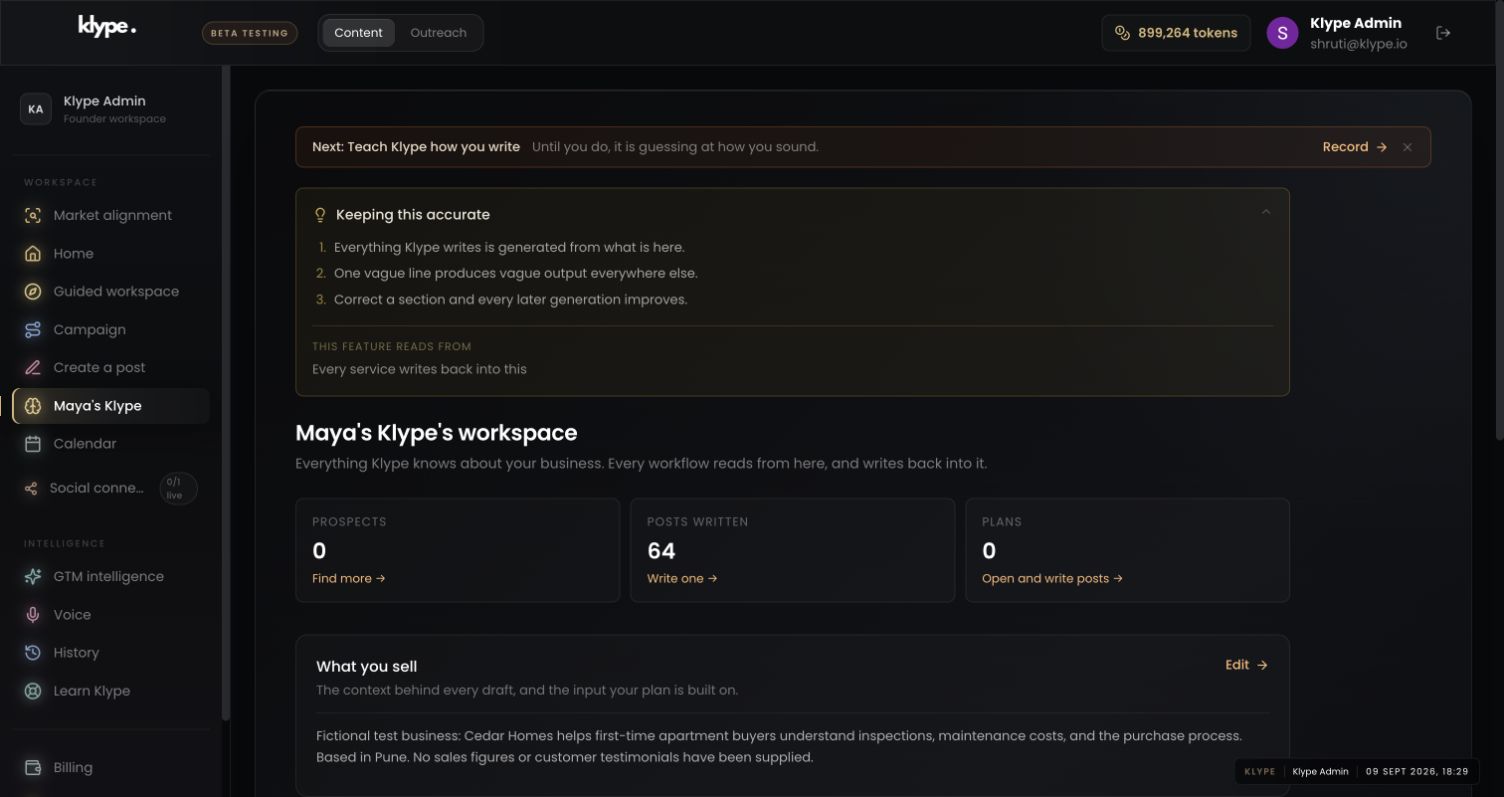
Give Klype a clear picture of what you sell, who you help and how you want to be understood.
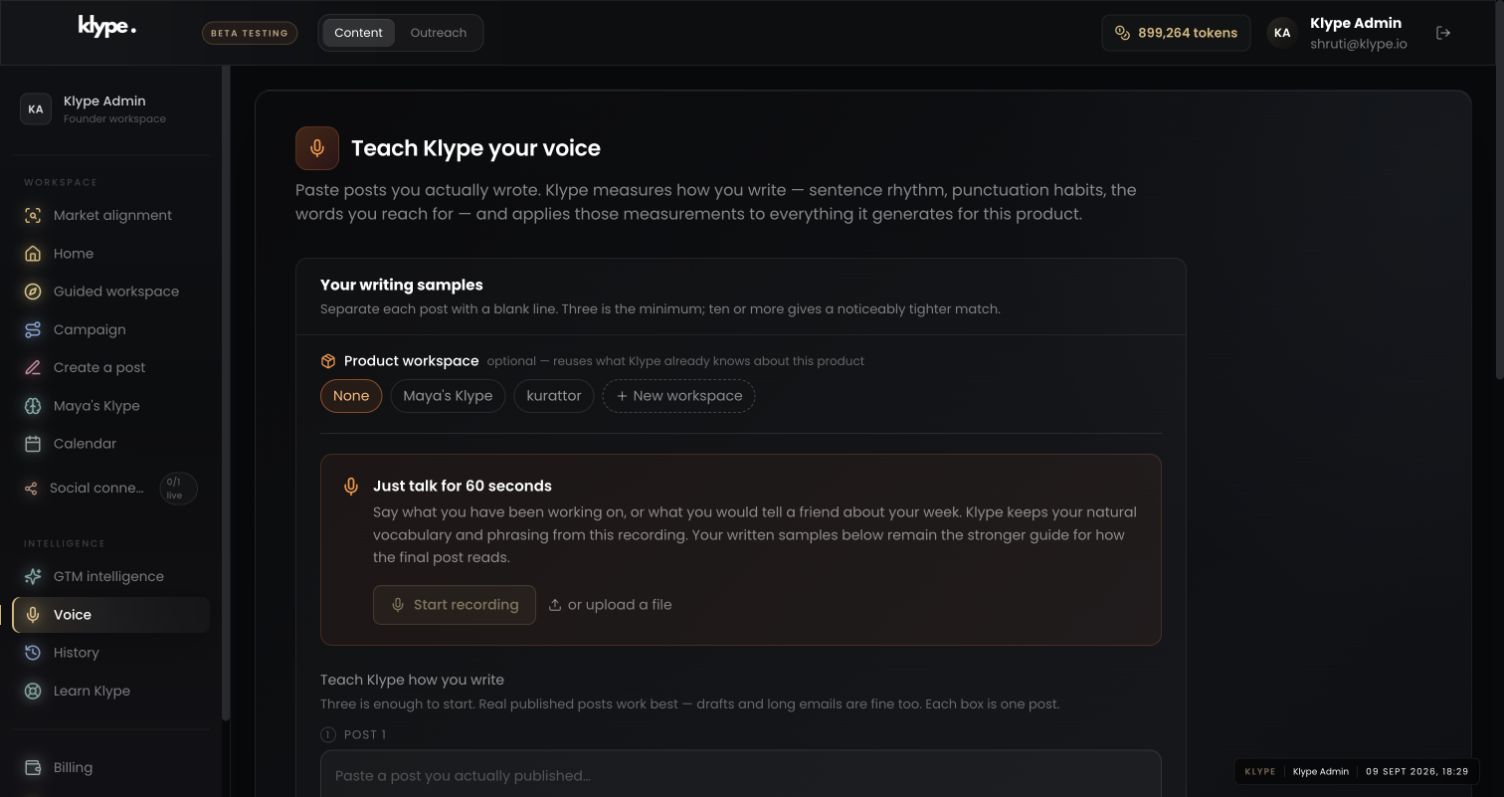
Use your own writing samples to give Klype a more useful starting point than a generic tone label.
Start with a real question or observation, choose the right channel and review the draft without rebuilding it.
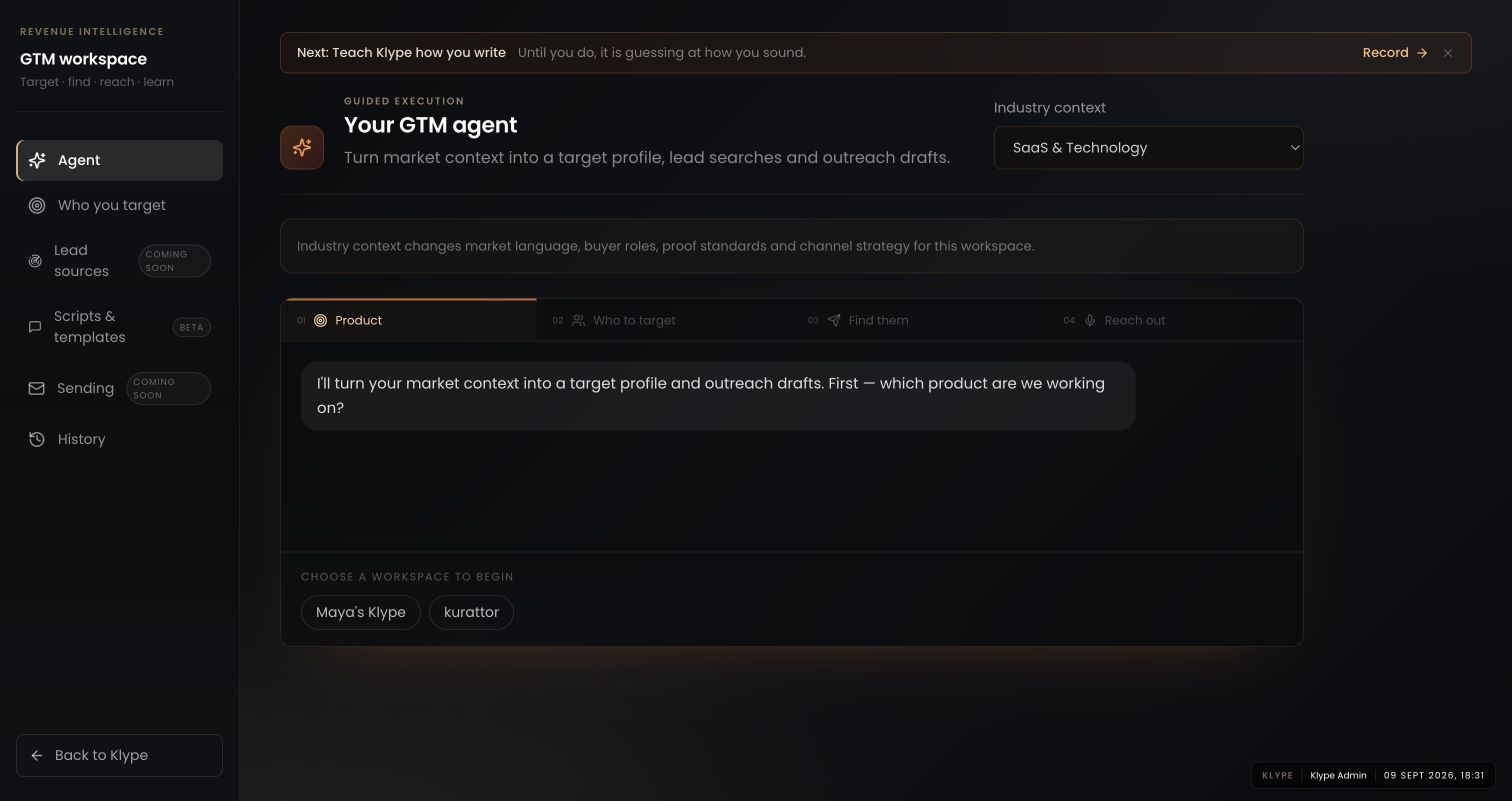
Use Klype's GTM workspace to choose an audience, a message and a next action you can review.
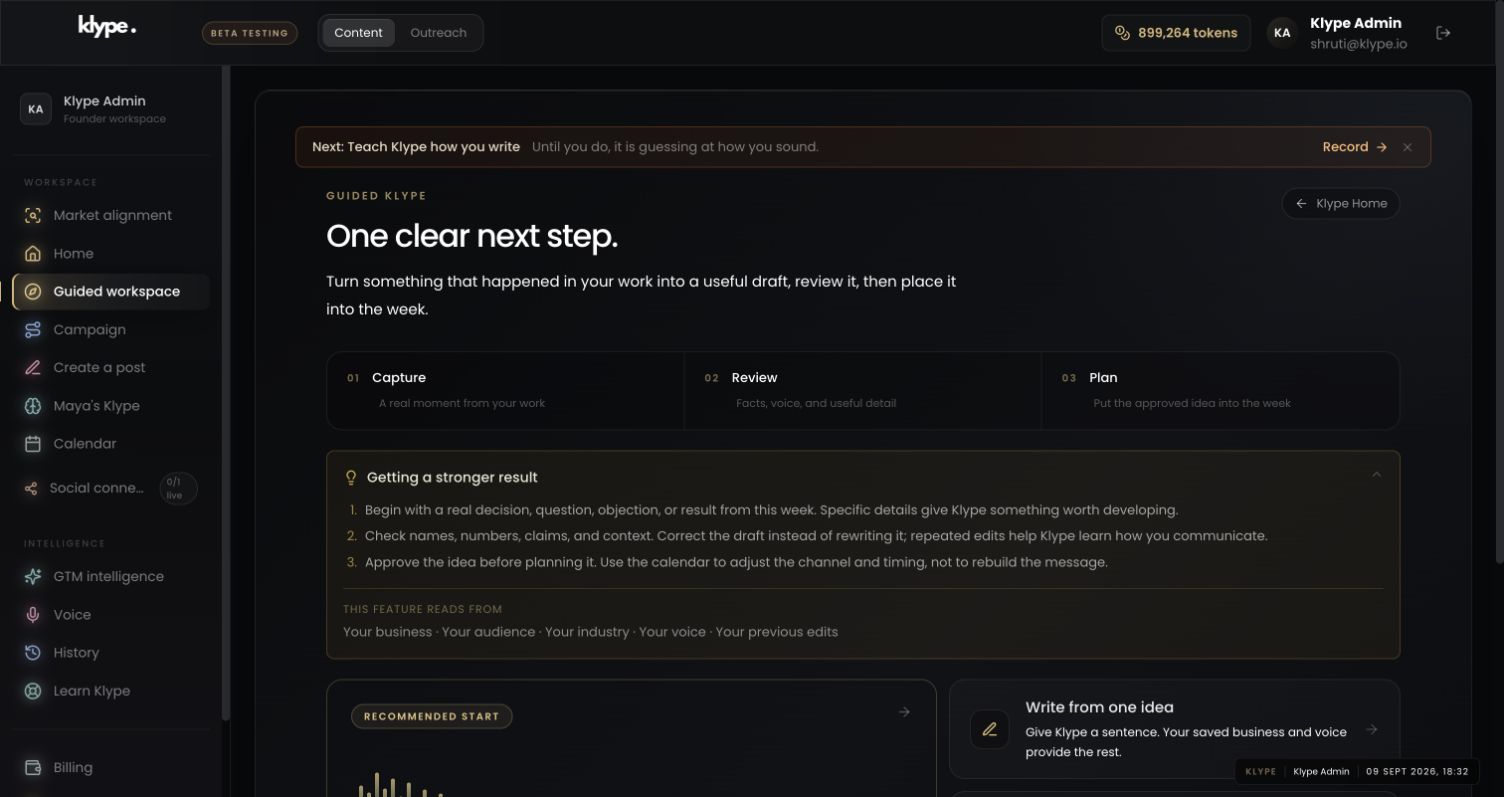
Follow a simpler capture, review and plan routine without replacing your normal Klype dashboard.
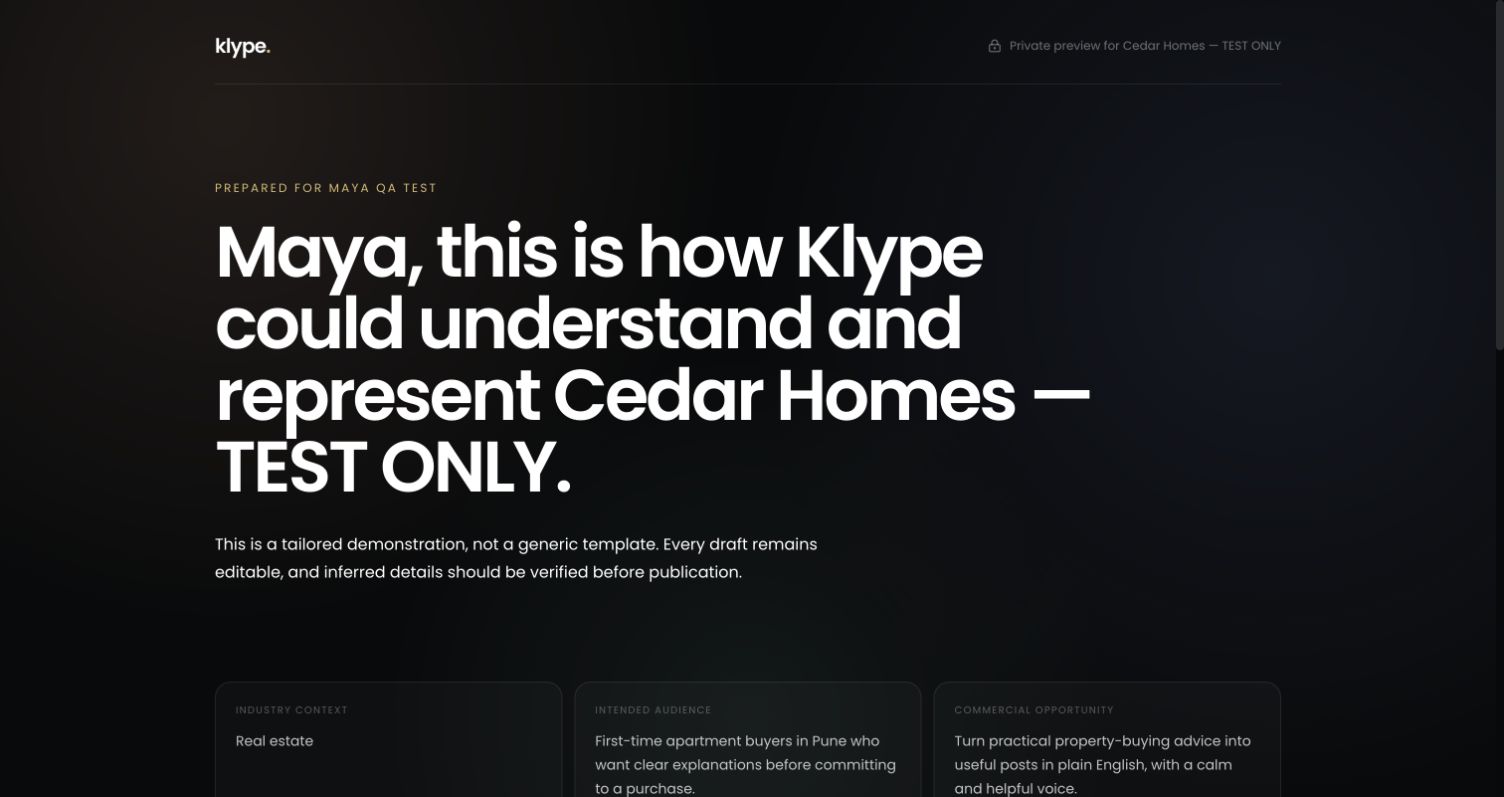
Inspect a business-specific example, then carry its context into your own Klype workspace.
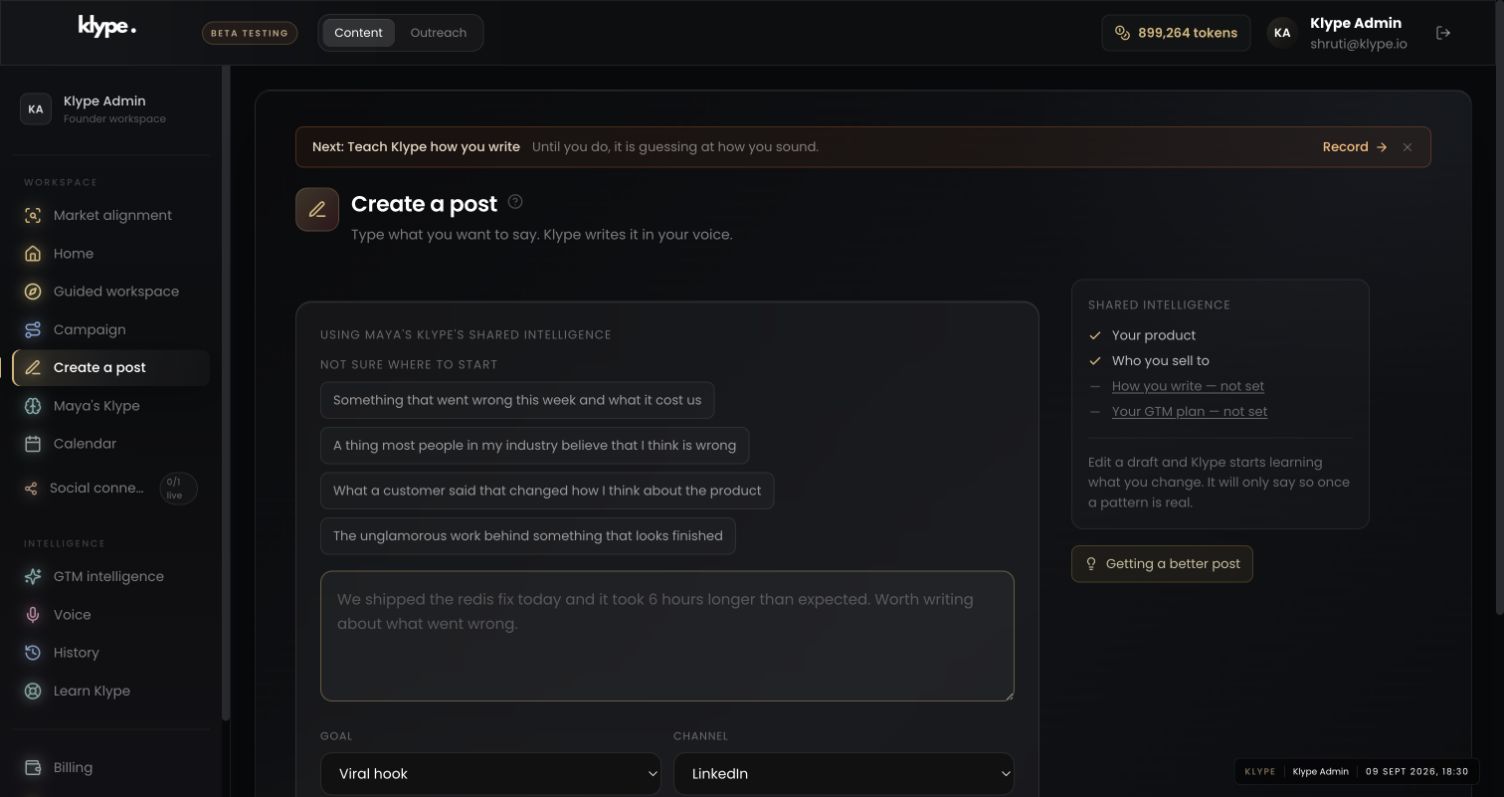
Build useful posts around the questions buyers ask before a viewing, an offer and a decision.
Explain your method while keeping confidential information, invented results and borrowed authority out of the post.
Start with questions from the work you already do, then prepare a small amount of useful content.
Choose the reader's decision before the format, and avoid mistaking professional applause for buyer interest.
Use a small review of relevant conversations and next steps rather than treating every impression as progress.
Use checklists, explanations and short observations for different reader tasks, not random variation.
Explain the problem, product decisions and practical lessons without inventing traction.
Make your service, process and fit clearer using real examples and practical explanations.
Explain coursework, personal projects and internships honestly, with a useful account of what you learned.
No guides match that search. Try another word or choose All.
 Shruti Kaushik