 Shruti Kaushik
Use Klype to prepare a tightly targeted email brief and analyse what you learn. Start with a small, compliant, verified cohort and measure delivery and relevant replies. More volume is not a substitute for a useful offer or a working sender setup.
A test brief with verified recipients, one message goal and a record of meaningful replies.
- Results from the previous campaign
- Legitimate business contact sources
- A tested sender and suppression process
Why this gets difficult
Cold email can fail before the copy is read. Delivery, list quality, timing and offer relevance are separate problems. Rewriting the first line without checking those foundations makes the next campaign difficult to interpret.
A personalised sentence is not necessarily a relevant message. Mentioning a recipient’s latest post does little if the service has no connection to their work. Start with fit and evidence, then write.
A practical example to adapt
We noticed your campaigns are underperforming. Our AI can transform your growth. Book a demo today.
Your public launch page introduces a subscription option. I made a checklist of delivery questions first-time subscribers often need clarified. Would you like to see the checklist?
The revised example uses a public observation rather than pretending to know campaign results. The checklist must actually exist, and any generalisation in it needs evidence or cautious wording.
Follow the workflow, screen by screen
Use these screens as a map, then apply the example to your own workspace. Each step explains what to look for, not just which page to open.
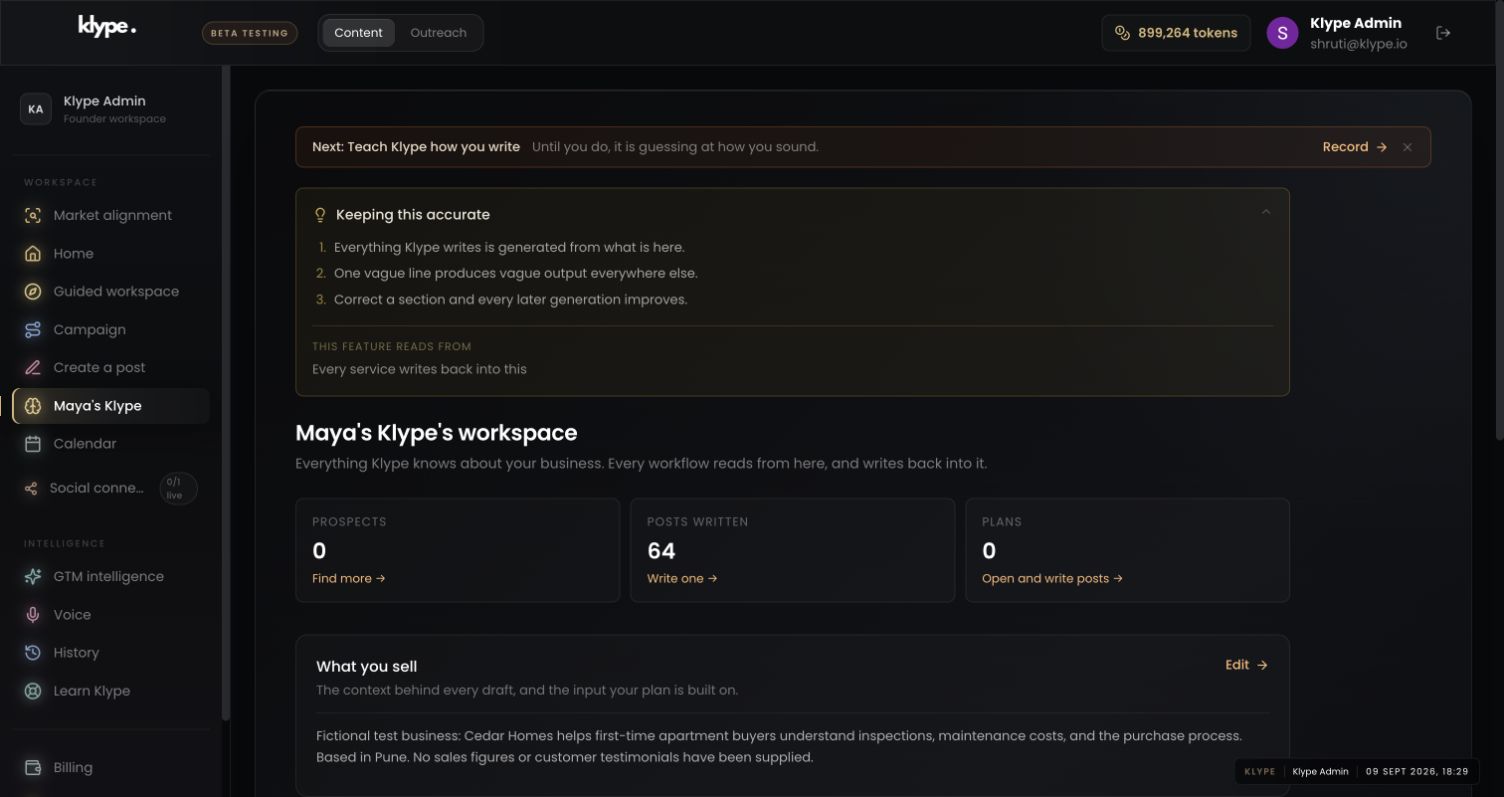
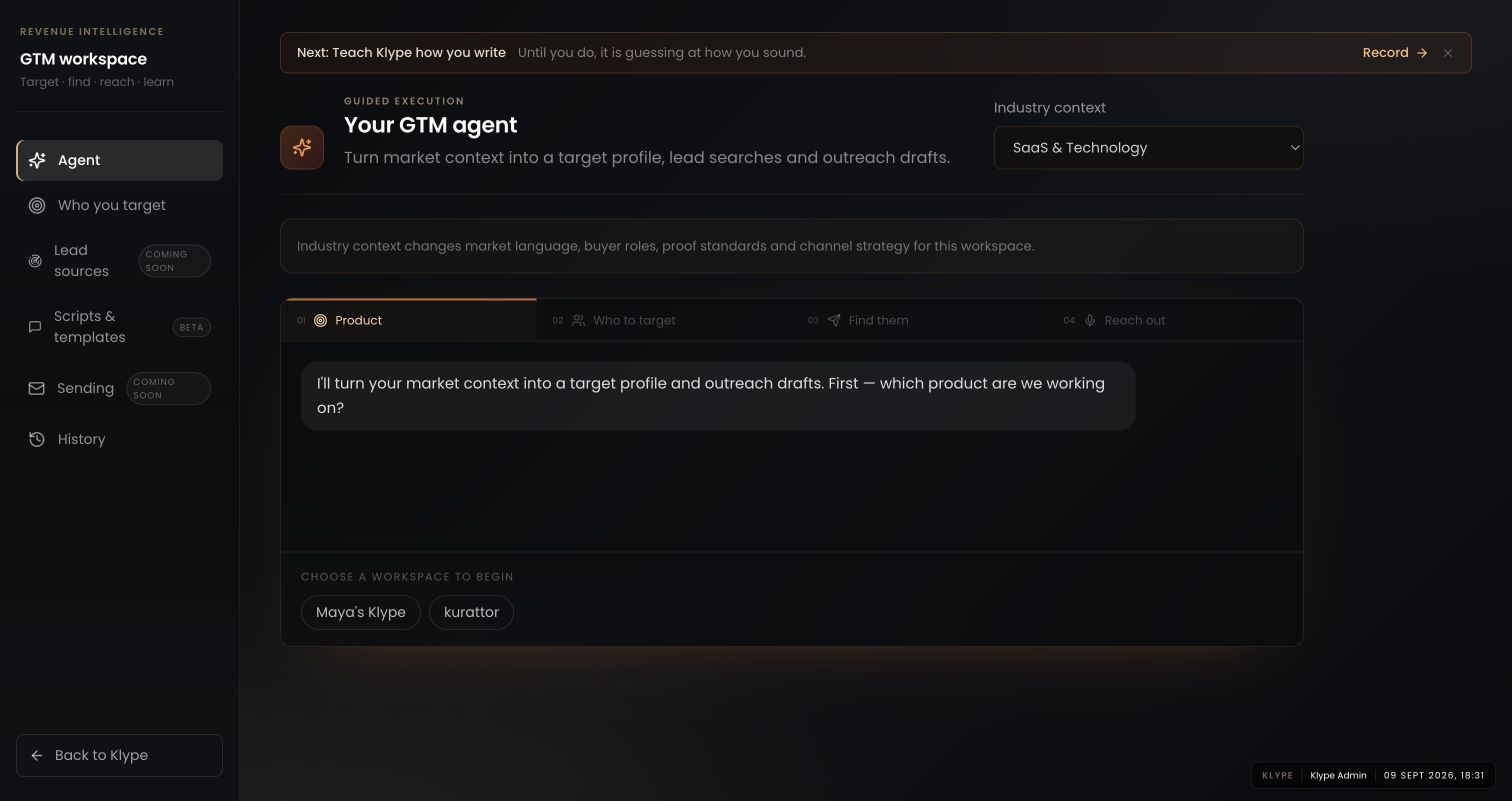
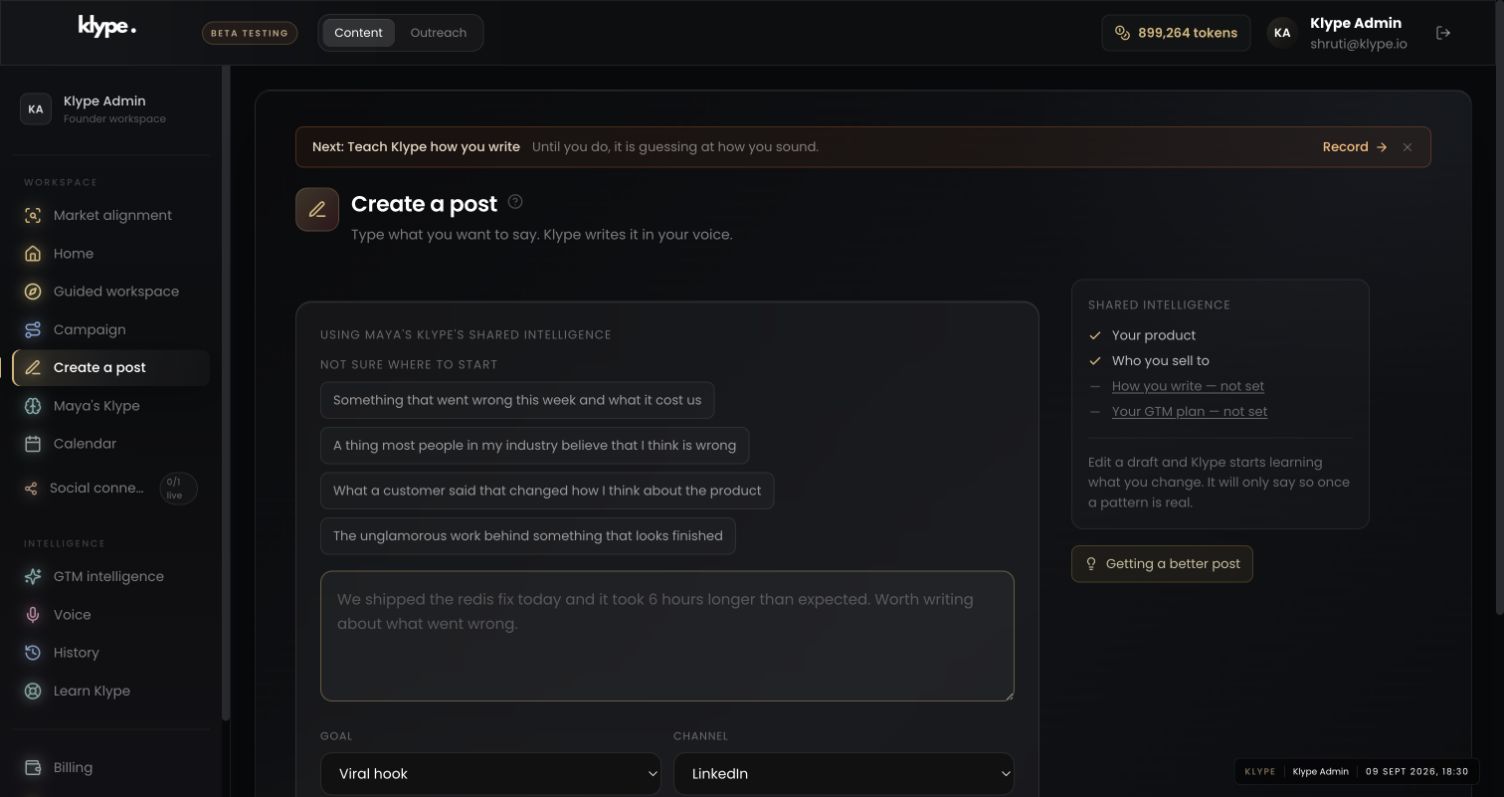
Real product captures from 9 September 2026, using the fictional Maya / Cedar Homes test workspace. These show the interface, not the article’s example being generated. The admin balance is not a plan allowance. Select a screenshot to inspect the full image, including the sidebar.
01Check the business context
Keep the target role, actual service scope and exclusions consistent in the workspace. These should guide the email, not generic growth language.
02Connect the idea to a plan
Use GTM to define the cohort and review criteria. Record delivered messages and relevant replies separately; unknown delivery is not zero.
03Give the draft one clear job
Use the content area to prepare an explanation of the resource. Sending and inbox monitoring remain separate tasks that must be verified.
Draft one concise email. Verified reason for contact: [source and fact]. Recipient responsibility: [checked role]. Resource: [actual asset]. Ask one question. Do not infer private results, guess contact details or claim a prior relationship. Include an easy way to decline.
Replace these example details with your own facts. This is a starting point, not a promise of a particular output.
Find out what the failed campaign actually measured
“Two thousand emails did not work” describes an outcome, not a diagnosis. Separate attempted sends, delivered messages, bounces, complaints, replies, relevant replies and meetings that actually happened. If delivery data is missing, mark it unknown. Read a sample of the old messages and check whether the recipient’s role, problem and offer were connected. Do not assume the subject line was the only issue. A list assembled around company size alone can be technically accurate and commercially irrelevant. Before buying another list or changing platforms, identify which stage you can measure and where useful conversations stopped.
Build a small, justified recipient list
For each business, record why the offer fits, the public source supporting that reason and when you checked it. Use business contact details from legitimate sources and do not invent addresses from a naming pattern. Check applicable marketing requirements for the recipient’s jurisdiction and your sending method. Keep opt-outs and suppression records across campaigns. This article is a workflow guide, not jurisdiction-specific legal advice. Klype can help organise a message brief from supplied information, but an AI-generated lead name or email is not verified contact data. Leave the field blank when you cannot establish it reliably.
Give the email one useful job
Write for a single decision: would the recipient like the resource, answer a relevant question or discuss a problem they have acknowledged? Do not ask them to watch a video, download a report, fill in a form and book a call in the same email. A short first message can state the verified reason for contact, name the resource and ask one question. Include a clear way to decline further contact. Avoid claiming that you analysed their results if you only saw a public page. Private campaign performance should not become a made-up opening line because it sounds more personalised.
Separate message preparation from sending readiness
Before sending, confirm that your authorised email setup works, the sender identity is clear and replies reach a monitored inbox. Review authentication and provider limits with the person responsible for your domain. Do not treat a drafted email in Klype as proof that a mailbox is connected or that a message was delivered. If sending is unavailable or marked coming soon, use your approved email system and retain the same suppression process. Run a test to an address you control before contacting prospects. Never use a customer’s inbox as the first test of a new integration.
Use a simple experiment rather than a premature A/B claim
A small cohort is useful for finding obvious problems, but it is rarely enough to establish a statistically reliable winner. Choose one target group, one resource and one opening. If you compare two versions, document the allocation and keep the other conditions similar. Count relevant replies, not just opens; privacy features and automated activity can make open tracking misleading. A hypothetical result of two useful replies from ten delivered emails is a signal to investigate, not proof of a repeatable 20% response rate. Read the replies and ask whether the people have the problem your paid service addresses.
Feed the objections back into the offer
When someone says the report is interesting but not relevant, ask what part does not fit if the conversation allows it. When the wrong role replies, improve your recipient criteria. When people recognise the problem but reject the next step, review the scope, price or commitment you are asking for. Save these observations in the GTM review notes and use them to improve the next message and article. Do not regenerate the entire plan after every reply. A useful system keeps the parts that worked and changes the specific assumption that failed. Stop sending when the evidence points to a delivery or relevance problem.
Try it with your own work
Take ten records from the old campaign and write a one-line reason the offer was relevant to each business. If most reasons are vague, fix the selection criteria before changing the subject line.
Prepare a smaller new cohort and a reviewed message. Check the sender, record outcomes and read every response before expanding. Keep a written stop condition for bounces, complaints or obvious mismatch.
When the result needs work
Check current feature availability and checkout terms in the app.
Common questions
Can Klype replace email delivery software?
Do not assume so. Verify the current sending integration and provider setup separately from drafting.
How large should the first test be?
Small enough to verify every recipient and review every reply. This is a learning test, not a promise of statistical significance.