 Shruti Kaushik
Measure content against the action it was meant to support. For a small business, a relevant question, a qualified enquiry or a clearer sales conversation can be more informative than a large view count. Choose a baseline and record uncertainty; no universal engagement target proves that a post worked.
A small evidence log that changes your next content decision without pretending to prove causation.
- A purpose for each post
- A consistent observation window
- A decision rule you can explain
Why this gets difficult
A large impression count can be useful, but it does not explain whether the right people understood your service. A low-reach explanation may help a prospect prepare for a conversation. Measurement becomes clearer when you define the job of the content before looking at the numbers.
Separate visibility, response and commercial progress. Visibility asks whether the content was seen. Response asks what people did or asked. Commercial progress asks whether a relevant conversation moved forward. These are connected stages, not interchangeable labels. A dashboard should not turn every engagement into a lead.
Replace a vague success claim with an evidence note
This post performed well because it received more likes than usual.
Purpose: explain the first consultation. Observation: two people asked what information to prepare; one said the checklist answered that question. Next test: make the preparation list easier to find. These are illustrative observations, not Klype customer results.
The note states what was being tested and how the next action follows from the observation. It does not say the post caused a sale. You can still record impressions and likes, but they sit beside the purpose and response rather than replacing them.
Follow the workflow, screen by screen
Use these screens as a map, then apply the example to your own workspace. Each step explains what to look for, not just which page to open.
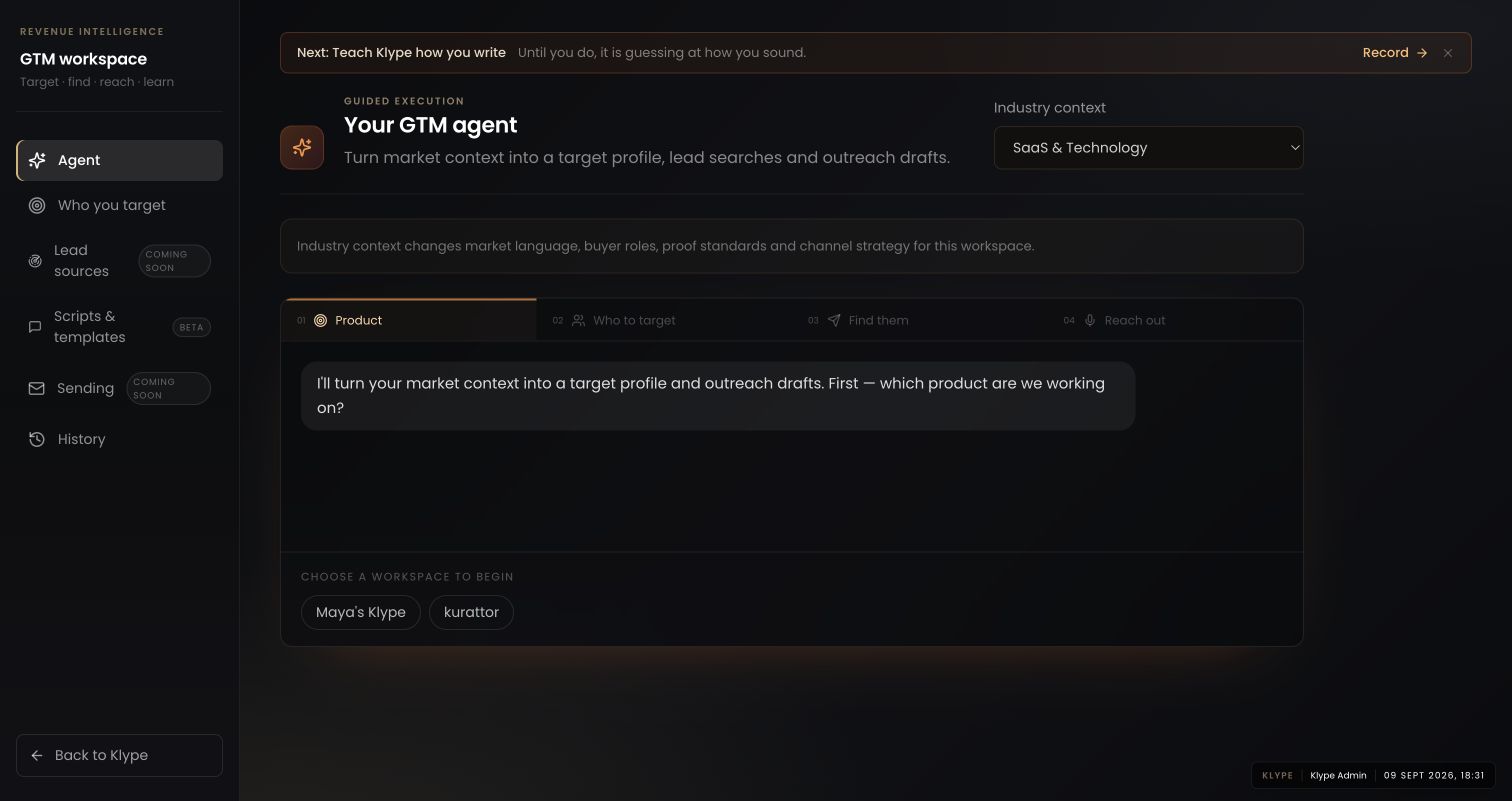
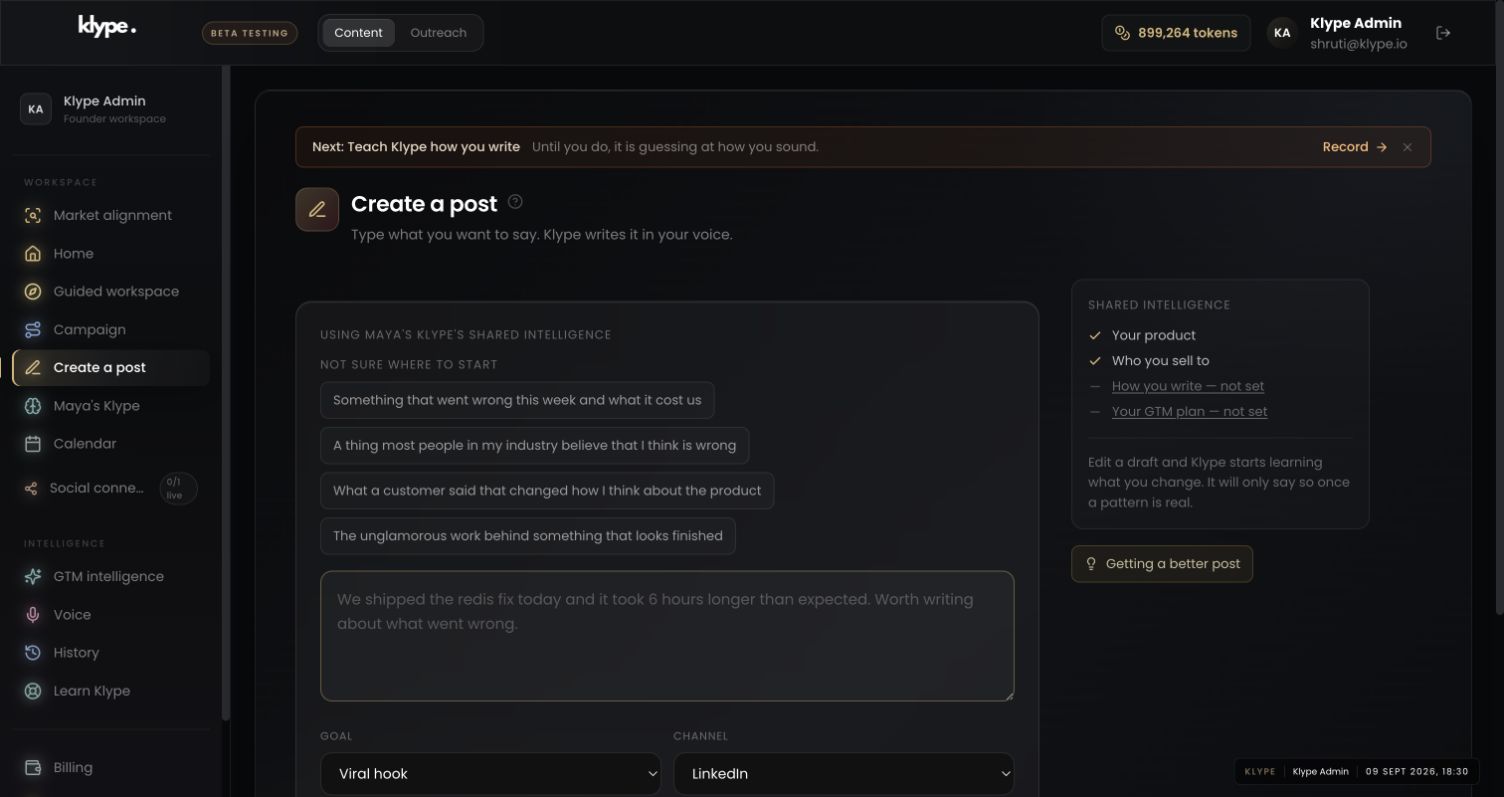
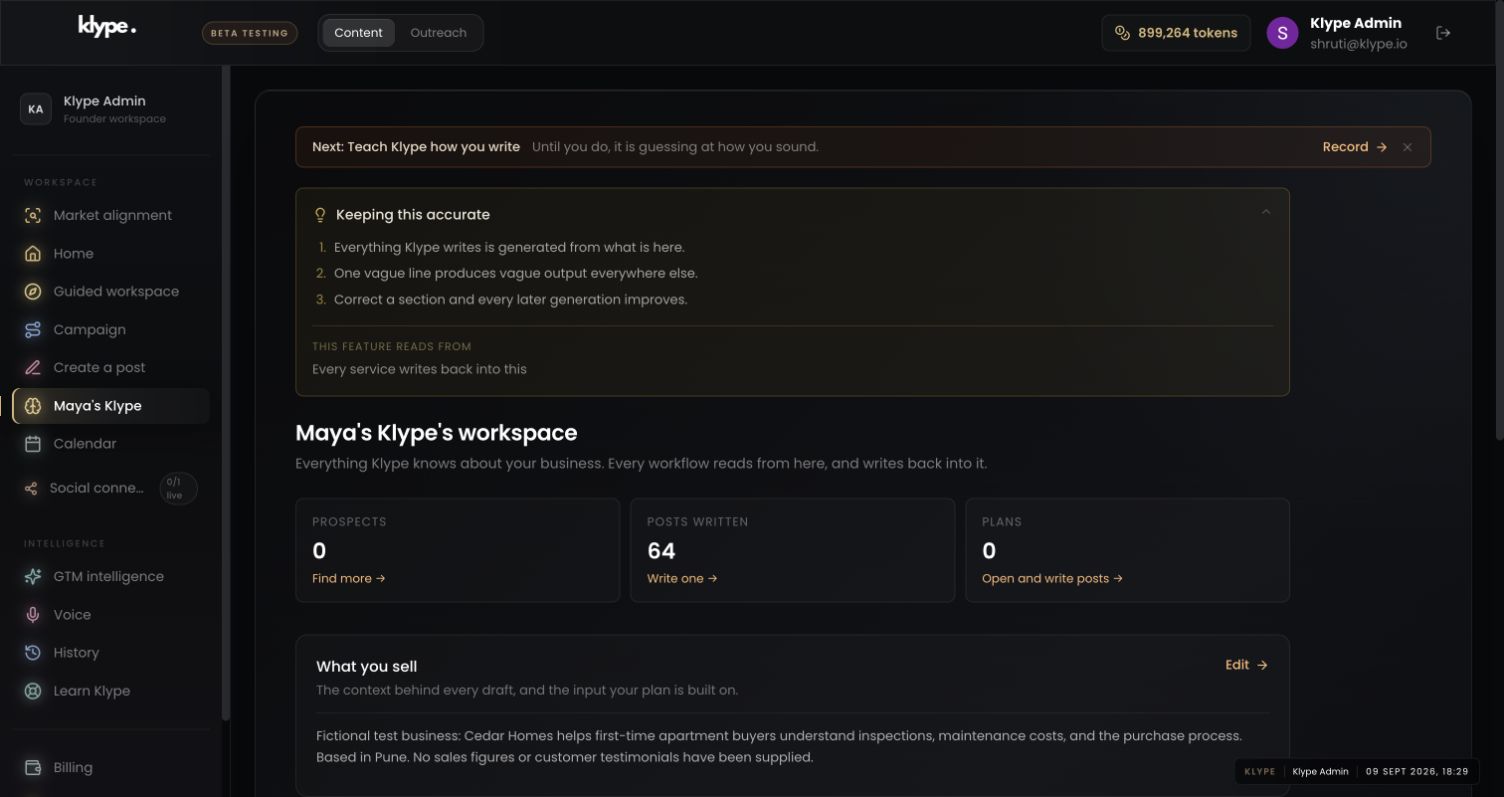
Real product captures from 9 September 2026, using the fictional Maya / Cedar Homes test workspace. These show the interface, not the article’s example being generated. The admin balance is not a plan allowance. Select a screenshot to inspect the full image, including the sidebar.
01Connect the idea to a plan
Use the plan to name the intended audience and action before choosing success measures.
02Give the draft one clear job
Write the explanation with that job in mind. A post intended to reduce confusion needs a different review from a launch announcement.
03Check the business context
Update the saved business explanation if the same misunderstanding appears repeatedly. The screenshot is context, not an analytics report.
Plan a post that answers one recurring question about our first consultation. Include a review note describing what relevant response we should look for. Do not invent performance data or a universal engagement-rate target.
Replace these example details with your own facts. This is a starting point, not a promise of a particular output.
Give each post a job before publishing
A post may explain a service, answer a common objection or help a buyer prepare for a conversation. Write that job in one sentence. A post intended to reduce confusion should not be judged only by how many people liked it. Keep the measurement proportionate to the goal and the data you can actually observe.
Maintain a small evidence log
Record the post topic, intended audience, date and any relevant response. Add the next action if a conversation develops. You can keep this in your existing notes or spreadsheet; this guide does not claim Klype automatically attributes every enquiry. Mark observations as self-reported where appropriate. Do not infer private buyer intent from weak signals.
Review patterns rather than single-post winners
Compare several posts addressing similar decisions. Ask which explanations prompted useful questions and which needed clarification. A small sample can be noisy, so resist declaring a format successful after one result. Record changes in topic, timing and distribution that may explain a difference. The goal is a better next decision, not a precise-looking score unsupported by evidence.
Use the review to update the next plan
If readers repeatedly misunderstand the same point, update the workspace description or next brief. If a channel produces relevant conversations, choose a focused follow-up experiment. Keep your GTM plan connected to what you observed. Avoid changing the entire strategy because a single post had low reach, or assuming a high-reach post created revenue.
Try it with your own work
Keep one row per post in a simple note or spreadsheet: date, topic, intended reader, intended action, observed response and next decision. When a person mentions a post, record that as self-reported evidence. When you do not know the source of an enquiry, record unknown rather than assigning it to the latest post.
Compare like with like over a consistent period. A post shared once and a post promoted in several places did not receive the same exposure. If your sample is small, use counts and notes instead of a dramatic percentage. A useful review can end with “not enough evidence yet” and a specific plan to learn more.
When the result needs work
Check current feature availability and checkout terms in the app.
Common questions
What is a good engagement rate?
There is no single target that establishes business value across audiences and channels. Start with your own baseline and a specific goal.
Can I attribute a sale to one post?
Only if you have evidence supporting that connection. Often several interactions contribute, so avoid false precision.