 Shruti Kaushik
Prioritise leads using separate evidence for business fit, timing and expressed interest. Klype can help connect that context to content and outreach preparation, but a generated score is not proof of buying intent or a verified contact.
An explainable qualification worksheet and a next action for each prospect.
- Your service boundaries
- Source links or conversation notes
- A suppression and review process
Why this gets difficult
Sales teams often mix “looks like our customer” with “wants to buy now.” That turns an audience list into an exaggerated pipeline and encourages premature pitches.
Opaque scoring makes the problem worse. If nobody can explain why a person ranks highly, the score is difficult to improve and easy to misuse. Start with evidence that a human can inspect.
A practical example to adapt
This founder liked our post, so the AI lead score is 95 and they are ready to buy.
Fit: company appears within scope. Timing: a public launch is recent. Interest: liked a post, no buying need confirmed. Next step: review relevance before offering a resource.
The second record preserves uncertainty and gives a proportionate next action. It does not turn a small social interaction into a claim about budget or purchase probability.
Follow the workflow, screen by screen
Use these screens as a map, then apply the example to your own workspace. Each step explains what to look for, not just which page to open.
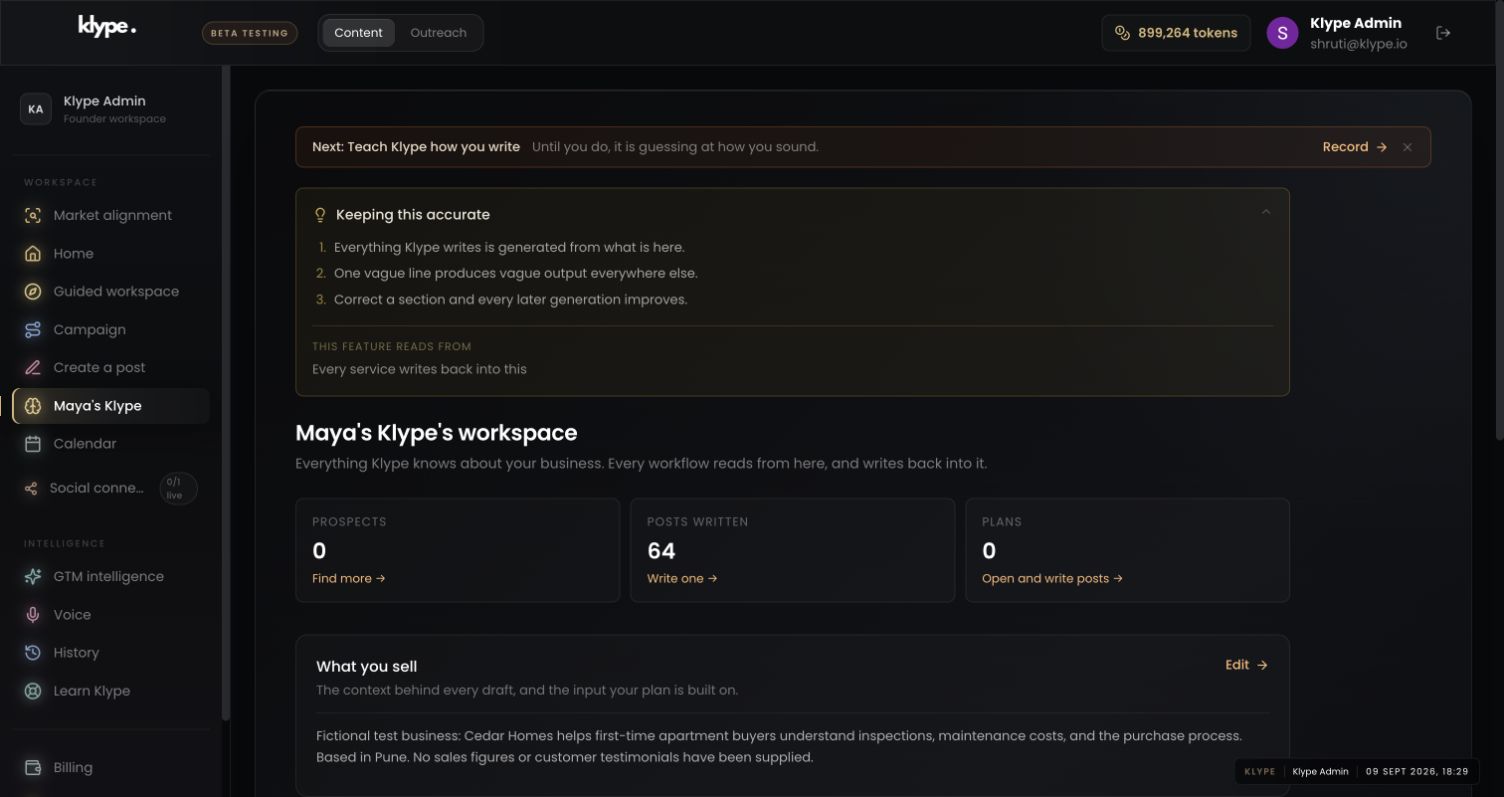
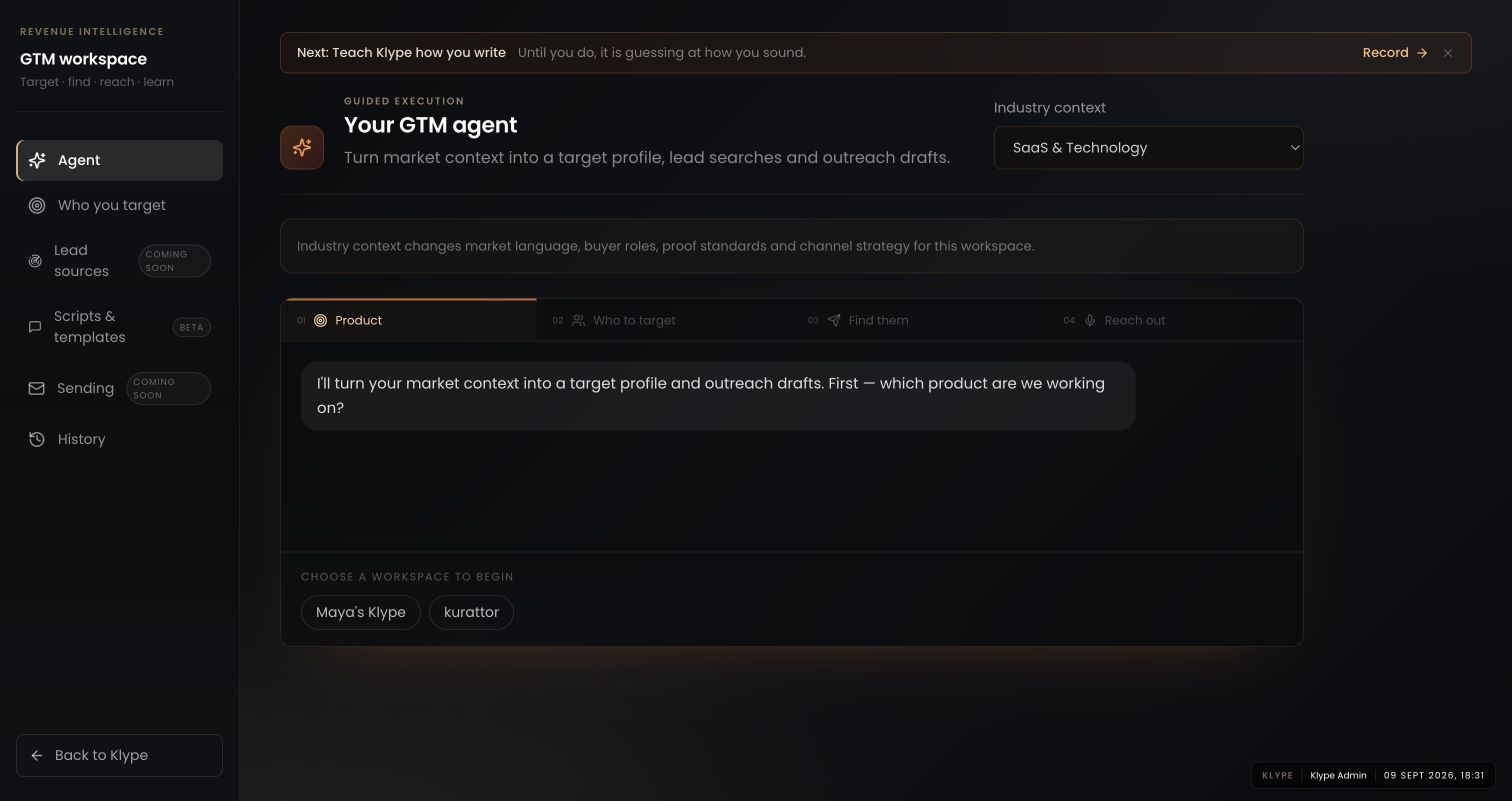
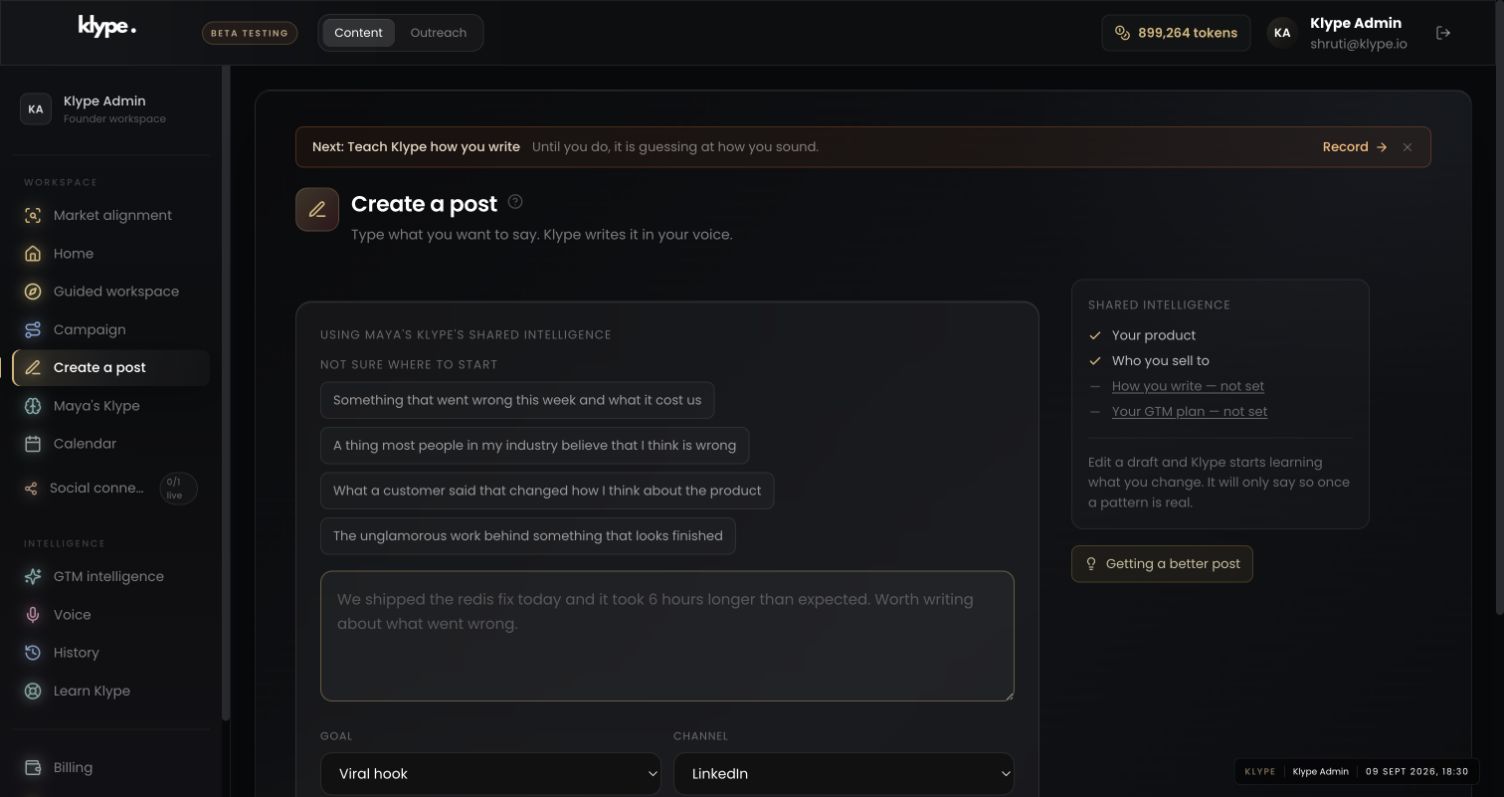
Real product captures from 9 September 2026, using the fictional Maya / Cedar Homes test workspace. These show the interface, not the article’s example being generated. The admin balance is not a plan allowance. Select a screenshot to inspect the full image, including the sidebar.
01Check the business context
Define the ideal buyer and exclusions in the workspace. These are the criteria against which you review records.
02Connect the idea to a plan
Use GTM to connect the buyer segment to a relevant resource and next step. Validate any recommended signal against the original source.
03Give the draft one clear job
Draft content for the unresolved buyer question rather than pressuring every interested reader to buy. Use actual conversation evidence in the next brief.
Review these prospect notes. Separate fit, timing and expressed interest. Quote the supporting observation and mark unknowns. Suggest one proportionate next action and a disqualifier. Do not infer private budgets, fabricate contact details or label a score as purchase probability.
Replace these example details with your own facts. This is a starting point, not a promise of a particular output.
Define a qualified conversation before assigning a score
A qualified lead is not simply someone with the right title. Decide what you need to know before offering the next commercial step: whether the business fits, whether the problem is relevant, who owns it and whether the person is willing to discuss it. Budget may matter later, but do not invent it from company size. Write the minimum conditions in plain language. In Klype’s workspace, describe the businesses you can serve and the ones you should decline. A clear exclusion saves more time than an elaborate score that ranks everyone as promising.
Keep fit, timing and expressed interest in separate columns
Fit concerns whether your service applies to the business. Timing concerns an observable event or stated need. Interest concerns what the person actually said or did in relation to your offer. A marketing head at a suitable company can be a good fit with no current interest. Someone who downloads a report can be interested in the topic but unable to buy. A launch announcement is a timing clue, not consent to outreach. Separate columns make these distinctions visible. If you later calculate a score, preserve the underlying evidence so a reviewer can understand and challenge it.
Use a simple evidence ladder rather than false precision
Label a record “unknown,” “publicly indicated” or “confirmed in conversation” for each important condition. These labels explain more than a bare 87 out of 100. If you choose numerical weights for internal prioritisation, document that they are your operating rules, not a model’s prediction of purchase probability. Do not train yourself to trust a number simply because it appears in a polished interface. Review a few high-ranked and low-ranked records to see whether the rules match real judgement. A useful worksheet should make it easier to decide the next action, not create an illusion that uncertainty has disappeared.
Match the next action to what is actually known
A good-fit company with an unconfirmed problem might receive a relevant resource through an appropriate channel. A person who asks how the service works may be ready for a scope discussion. Someone who says they are not interested should be suppressed from the sequence, not moved to an aggressive follow-up stage. Keep a reason for every next action. Klype can help prepare language from the supplied context, but do not assume that a planning output has verified a contact or observed their engagement. Check each data source and feature status. Manual review remains important when information is incomplete.
Record disqualification as useful information
If the business is outside your service area, needs a capability you do not offer or has no relevant problem, mark that clearly. Do not keep contacting a poor-fit lead because you spent time researching them. Save the reason without unnecessary personal information. Over several conversations, patterns in disqualification can improve the audience definition and content strategy. For example, if most readers want a low-cost template but your service is a bespoke research sprint, the resource may be attracting the wrong buying situation. That is a positioning lesson, not a reason to inflate your lead count.
Audit the worksheet against real conversations
At the end of a small test, compare your expectations with what people told you. Which public signals were genuinely useful? Which created misleading confidence? Did you mistake peer engagement for purchase interest? Update one rule at a time and keep the previous version for reference. Do not declare a scoring system validated after a handful of replies. The purpose of this first worksheet is consistency and transparency. As you collect more outcomes, you can evaluate whether the process improves prioritisation, but the early labels should remain understandable without a machine-learning explanation or a hidden formula.
Try it with your own work
Create a worksheet with five records you can legitimately review. For each, write one sentence explaining fit, timing and interest. If the same observation appears in all three columns, check whether you are double-counting it.
Compare the proposed next actions with what a careful salesperson would do. Remove records that should not be contacted and revise any rule that rewards activity without commercial relevance.
When the result needs work
Check current feature availability and checkout terms in the app.
Common questions
Is a like a warm buying signal?
It shows an interaction, not necessarily purchase interest. Interpret it alongside professional fit and explicit conversation.
Can I use an AI score as a sales forecast?
Not without validation against relevant outcomes. An internal prioritisation score should not be presented as a probability of purchase.