 Shruti Kaushik
A GTM plan should help your startup choose a first buyer, define a clear offer, prioritise channels and run a measurable acquisition test. Klype can connect that planning context to content and review notes; a generated plan still needs evidence and judgement.
A one-week acquisition experiment with a buyer, asset, owner, time budget and review decision.
- A real offer and delivery capacity
- One initial buyer segment
- A weekly time and cash budget
Why this gets difficult
A long strategy document can create a feeling of progress without changing what happens tomorrow. The missing link is usually a decision: who to focus on, what to offer or what to stop doing.
The other failure is treating every recommendation as equally urgent. A startup needs deliberate exclusions. Saying “not this week” is part of a useful plan, especially when the founder also delivers the service.
A practical example to adapt
Launch thought leadership across all channels, build strategic partnerships and optimise the growth funnel.
This week, review one buyer question, prepare a bounded report and offer it to a small relevant cohort. The founder owns the work. Review qualified replies on Friday before adding another channel.
The second plan names work, ownership and a decision point. It can be challenged against a real calendar instead of admired as a list of ambitions.
Follow the workflow, screen by screen
Use these screens as a map, then apply the example to your own workspace. Each step explains what to look for, not just which page to open.
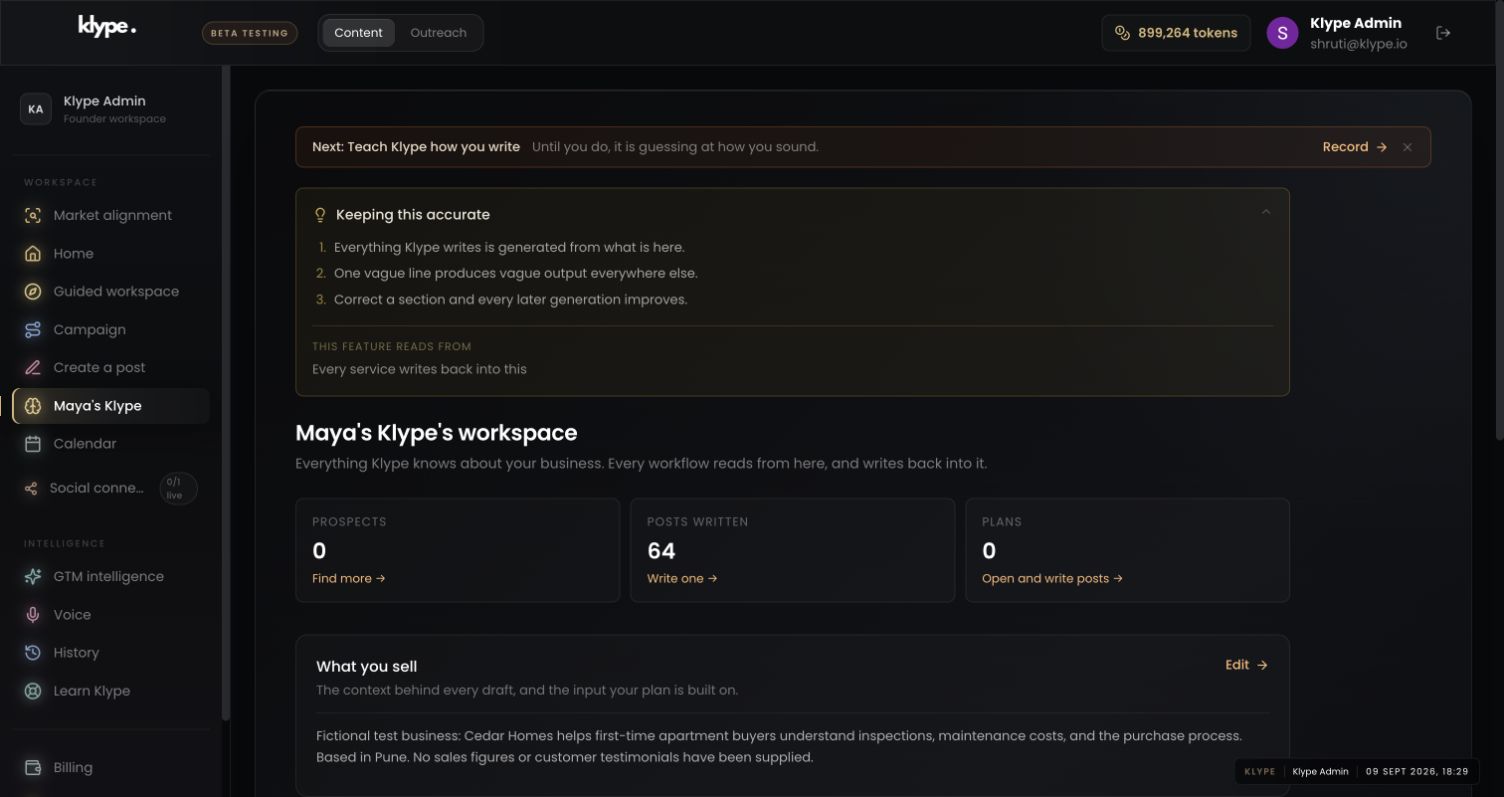
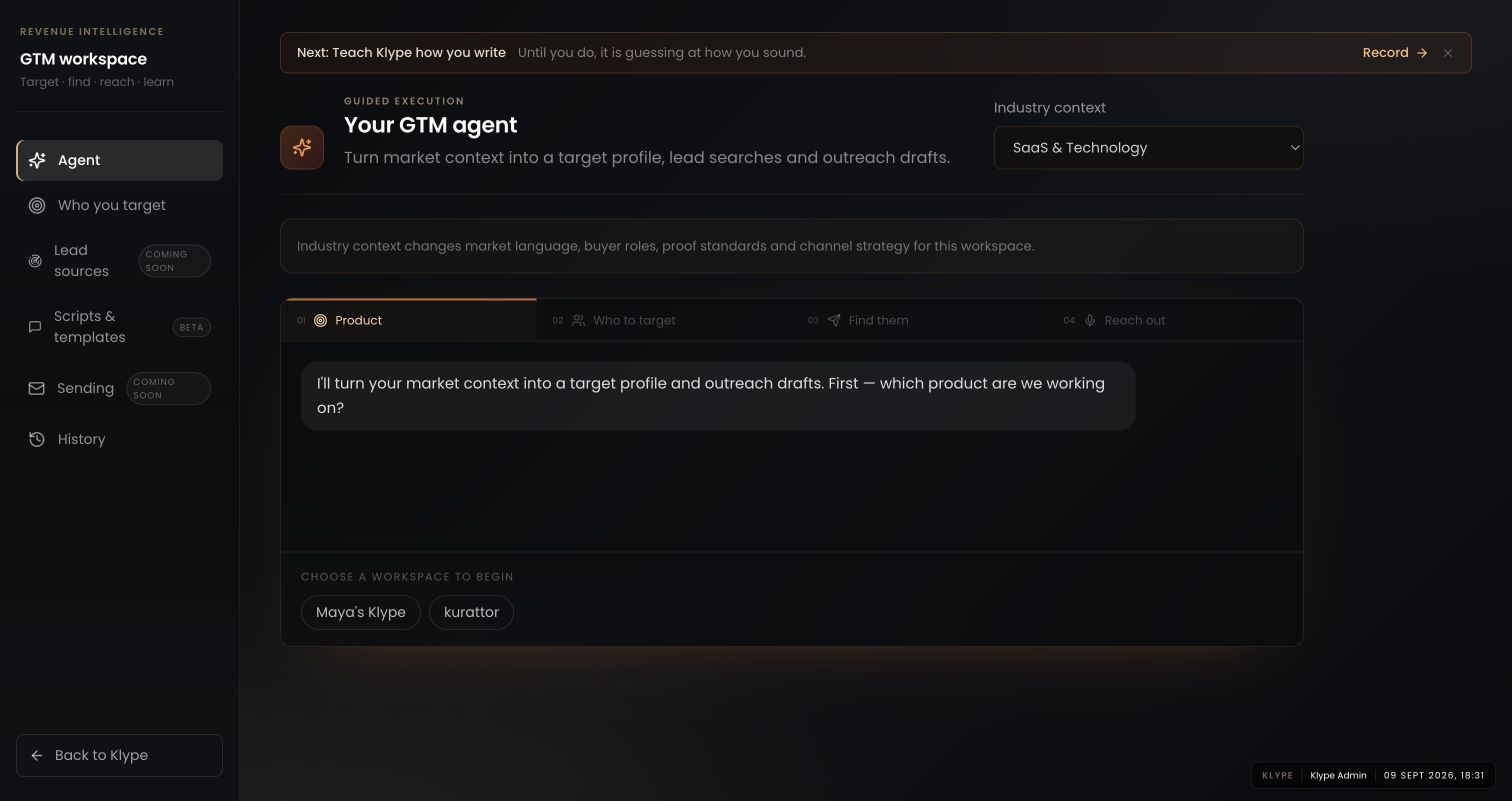
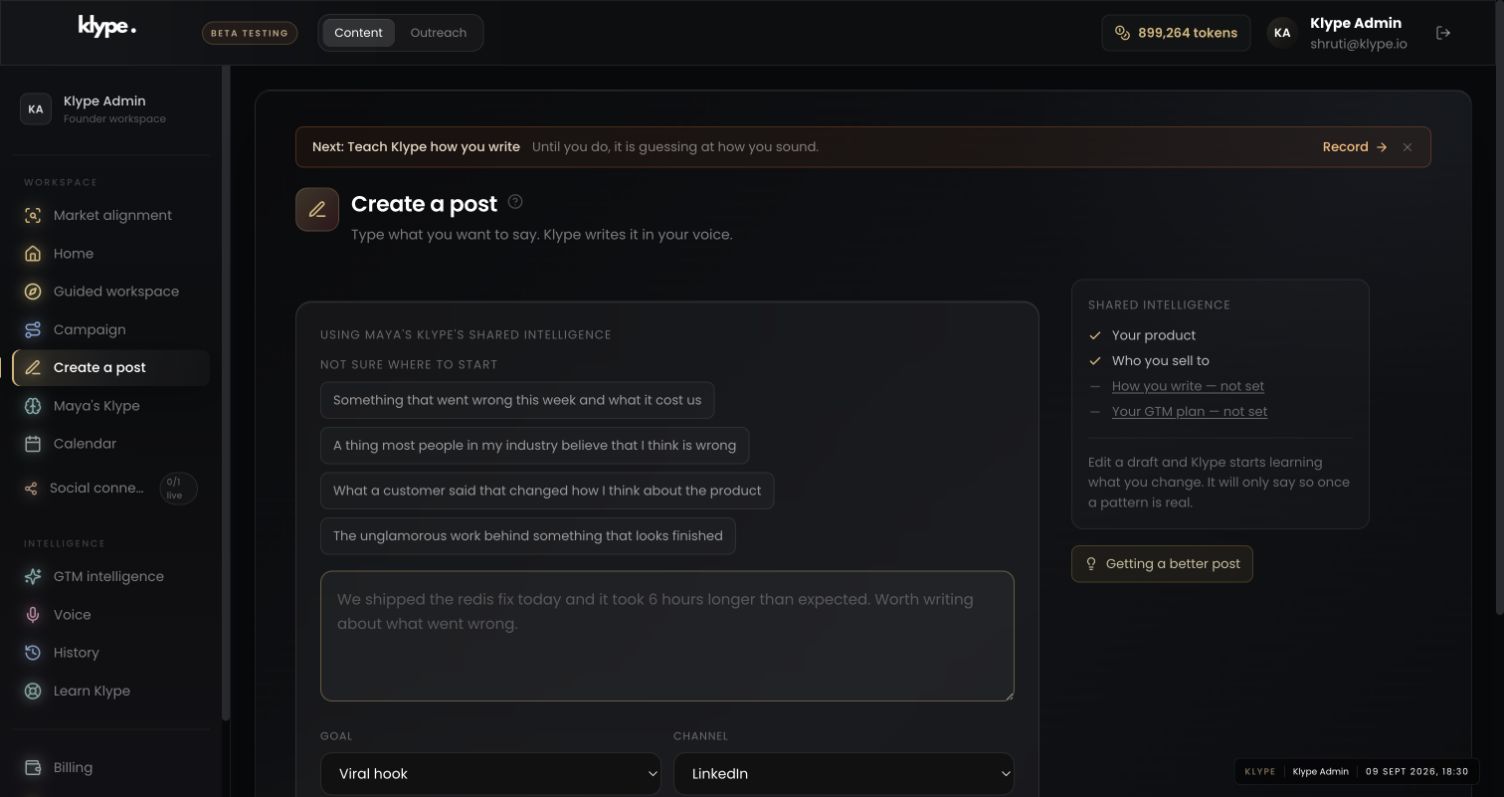
Real product captures from 9 September 2026, using the fictional Maya / Cedar Homes test workspace. These show the interface, not the article’s example being generated. The admin balance is not a plan allowance. Select a screenshot to inspect the full image, including the sidebar.
01Check the business context
Check the buyer, price and exclusions in the saved context before generating. Old business details can make an otherwise polished plan irrelevant.
02Connect the idea to a plan
Review the generated plan against your time budget, evidence and required message sequence. The live test on 10 September found gaps, so this is a review checklist, not a claim of perfect generation.
03Give the draft one clear job
Turn a reviewed plan item into one content brief. Keep the same buyer and evidence rather than starting again with a generic topic.
Create a one-week customer acquisition plan for [offer] and [buyer]. Capacity: [hours and people]. Budget: [amount]. Name one research question, one resource, outreach stages, manual steps, evidence gaps and a review decision. Do not invent results, team members or confidence scores.
Replace these example details with your own facts. This is a starting point, not a promise of a particular output.
Choose one first buyer rather than describing the whole market
A startup can serve several industries eventually, but an early acquisition test needs a recognisable buyer. Describe the person, the business situation and the decision your offer helps them make. Include who is not a fit. For a research studio, “small DTC skincare founders preparing a subscription launch” is easier to test than “all businesses that need growth.” Put that context into Klype before generating a plan. The broader market belongs in your long-term thinking; the first test needs a small enough audience that you can inspect whether the message is relevant.
State the offer in a way a buyer can evaluate
A plan should connect a problem to something you can actually deliver. Name the scope, expected turnaround, price where known, inputs required and exclusions. If you sell a two-week research sprint, explain what the buyer receives and what the sprint cannot establish. Avoid replacing this with “actionable insights” or “growth acceleration.” Klype can help organise the offer and draft explanations, but your delivery capacity remains the constraint. A beautifully written plan that assumes a team you do not have is not executable. Check every owner, task and commitment against the real people doing the work.
Rank channels without activating all of them
A list of ten channels is useful only if it distinguishes now, later and not suitable. Choose the route where your first buyers can be identified and your offer can be explained credibly. Assign one supporting channel if it has a clear job. A six-hour weekly budget cannot support deep research, several case studies, daily posts everywhere and constant outbound at the same time. Ask the plan to show the trade-off. In the GTM workspace, use the research-and-results area to keep the current question visible. Availability labels still matter: a suggested channel is not evidence of a working integration.
Specify the assets and messages you will actually make
The output should name a study question, a resource outline, a useful article angle and the messages needed to start a conversation. “Do content marketing” is not a deliverable. For a report-led approach, the sequence might be a connection note, a message after acceptance, resource delivery and a relevant follow-up. Review each step for factual claims and the recipient’s expected response. If a generated plan supplies only generic building blocks, fill the missing pieces before using it. Do not pretend that a research panel alongside the plan means the model has completed the research or written every necessary message.
Set a weekly decision instead of a vague success target
Choose a small test with a review date. Record the inputs you control, the outcomes you observe and the decision each result informs. For example, count verified recipients, delivered messages, resource requests and relevant conversations. If the starting conversion rate is unknown, keep it unknown until you have a cohort. A goal such as three paid projects in ninety days is useful as a direction, but it does not justify invented weekly conversion forecasts. Decide what would make you change the audience, offer or resource. Read the actual feedback before treating a rate as evidence that a strategy works.
Return to the plan with evidence, not just a request for a new version
The value of GTM work compounds when the next week starts with what you learned. Save the objections, questions and delivery constraints that changed your judgement. Keep the parts of the plan that remain useful. Regenerating the whole document can erase the distinction between a tested insight and a fresh suggestion. Use Klype to maintain context and prepare the next piece of work, while checking every factual claim. The plan earns its place when it reduces repeated decisions and improves the next experiment. It is not valuable merely because it has many sections or reads like a consulting presentation.
Try it with your own work
Write tomorrow’s work on one page. For every task, add an owner, a rough time allowance and the evidence it should produce. Remove anything that does not fit the available week.
At the review, ask which assumption changed. If you cannot answer, the experiment may have measured activity rather than learning. Choose the next test around one unresolved decision.
When the result needs work
Check current feature availability and checkout terms in the app.
Common questions
Should I regenerate my GTM plan every week?
Not automatically. Review new evidence first and update only what changed.
Does a GTM plan guarantee customers?
No. It organises choices and experiments. Demand, execution, offer quality and buyer response determine outcomes.