 Shruti Kaushik
Share the decision process, not the client's private details. A consultant can explain what to check, how to compare options and which mistakes to avoid without naming a customer or inventing a success story. Clearly distinguish an illustrative example from a real engagement.
An expertise-led explanation that reveals your reasoning without revealing a client’s private work.
- A method you can explain publicly
- A clearly illustrative scenario
- One diagnostic question for the reader
Why this gets difficult
Consultants often feel caught between two weak options: say something so general that it teaches nothing, or share enough detail to risk exposing an engagement. There is a third option. Explain how you think through a recurring decision using a scenario that is openly illustrative.
The value lies in your criteria. Show what you would check first, what changes your recommendation and where the approach stops being appropriate. This gives a prospective client a way to assess your reasoning. It is more useful than an unsupported success percentage and does not depend on borrowing a client’s authority.
Show the diagnostic method instead of the confidential story
We transformed a client’s sales process and unlocked unprecedented growth.
Imagine a small service business where enquiries arrive in three places. Before recommending a new system, I would check who owns the next reply, where the handoff is recorded and how the team notices an unanswered enquiry.
This example demonstrates the order of investigation. It does not claim a completed engagement or a result. A reader can apply the questions to their own process and decide whether your approach is relevant. That is useful evidence of your thinking, even without a named case study.
Follow the workflow, screen by screen
Use these screens as a map, then apply the example to your own workspace. Each step explains what to look for, not just which page to open.
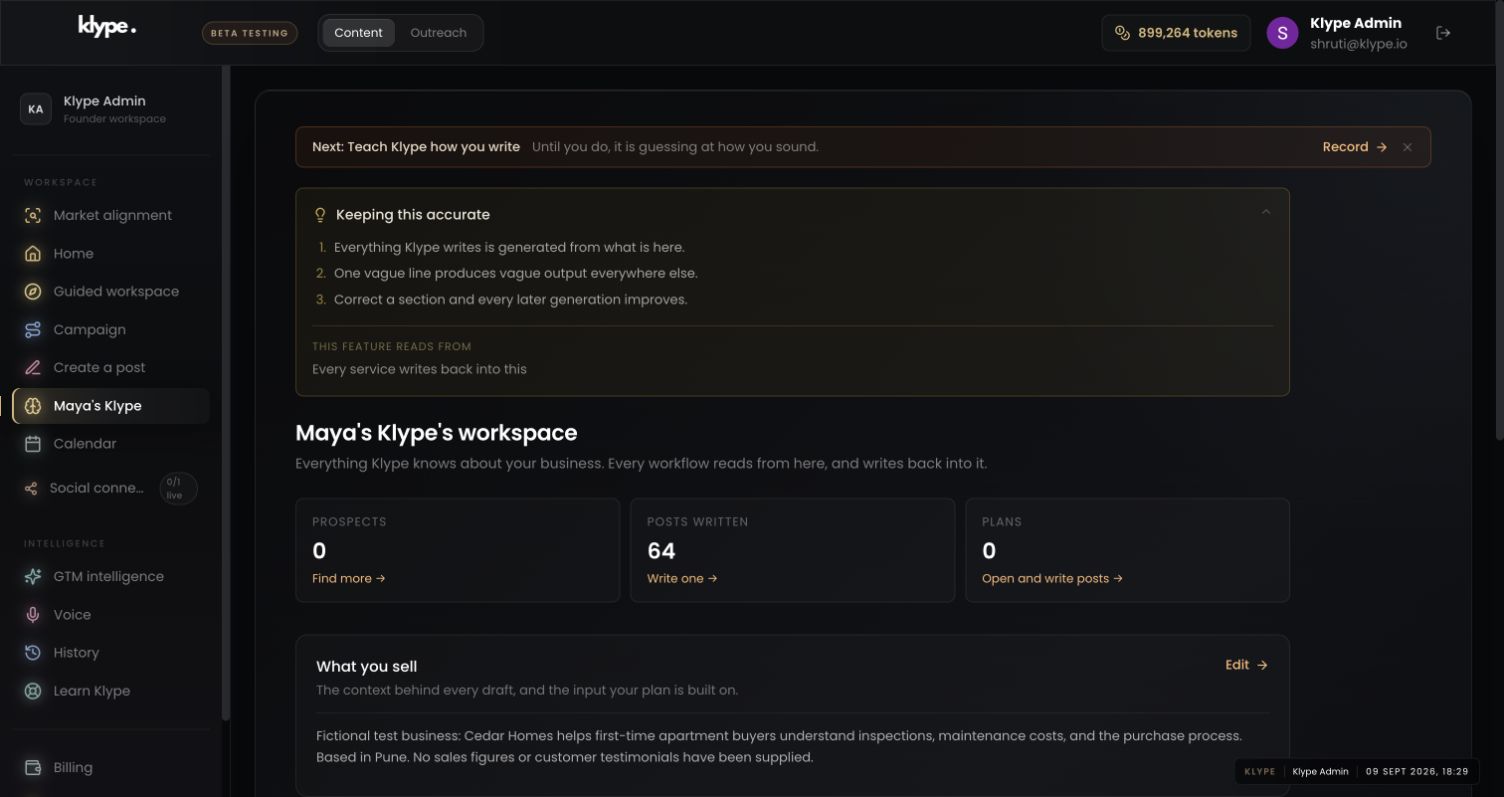
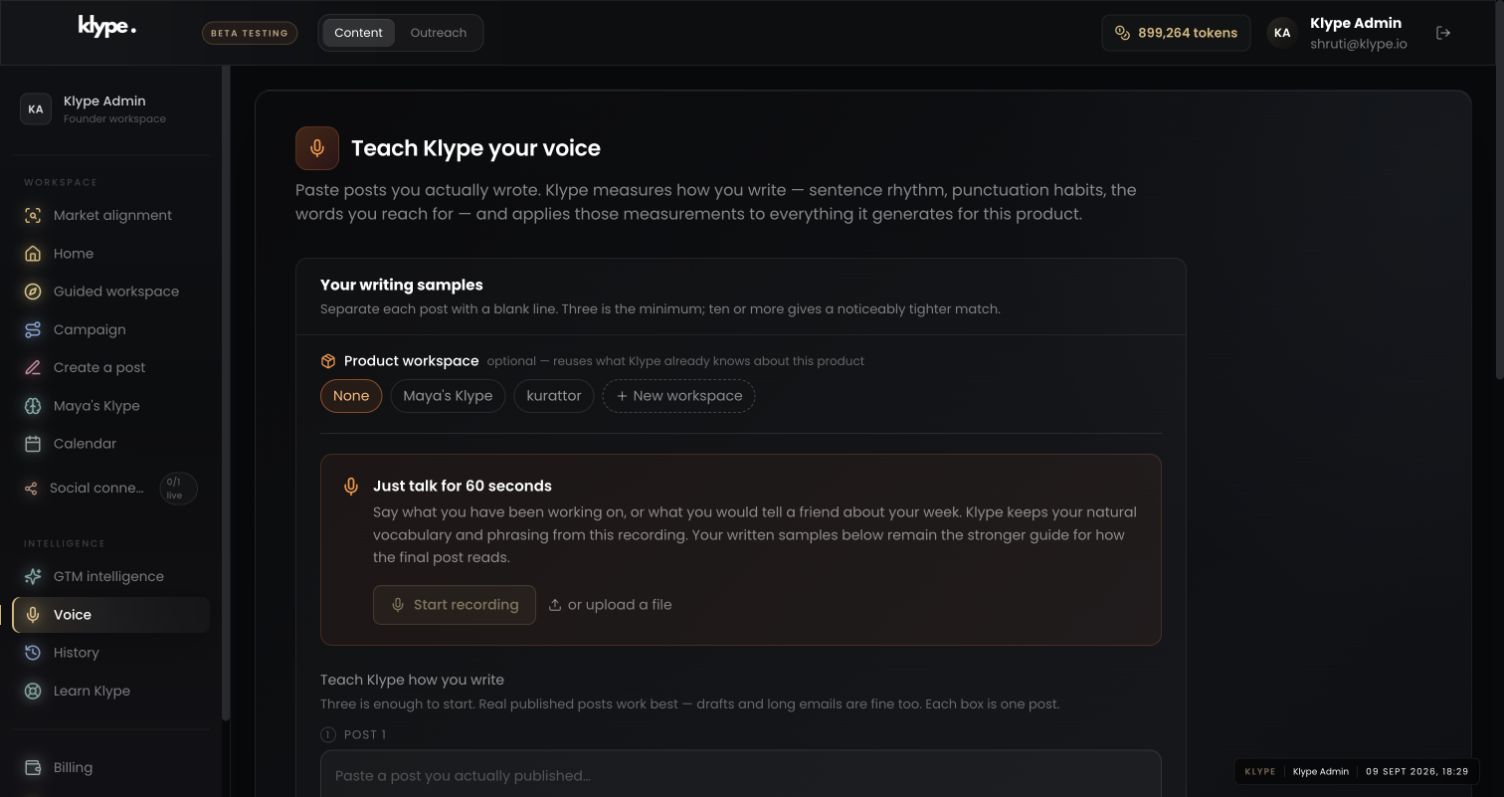
Real product captures from 9 September 2026, using the fictional Maya / Cedar Homes test workspace. These show the interface, not the article’s example being generated. The admin balance is not a plan allowance. Select a screenshot to inspect the full image, including the sidebar.
01Check the business context
Describe your actual consulting scope. If you advise on a process but do not implement software, make that boundary clear.
02Set a writing reference
Use your own explanations as voice samples, only when you are permitted to share them. Remove confidential material before providing input.
03Give the draft one clear job
Enter the public method and the scenario. Check the draft for accidental claims such as “we helped a client” that the brief does not support.
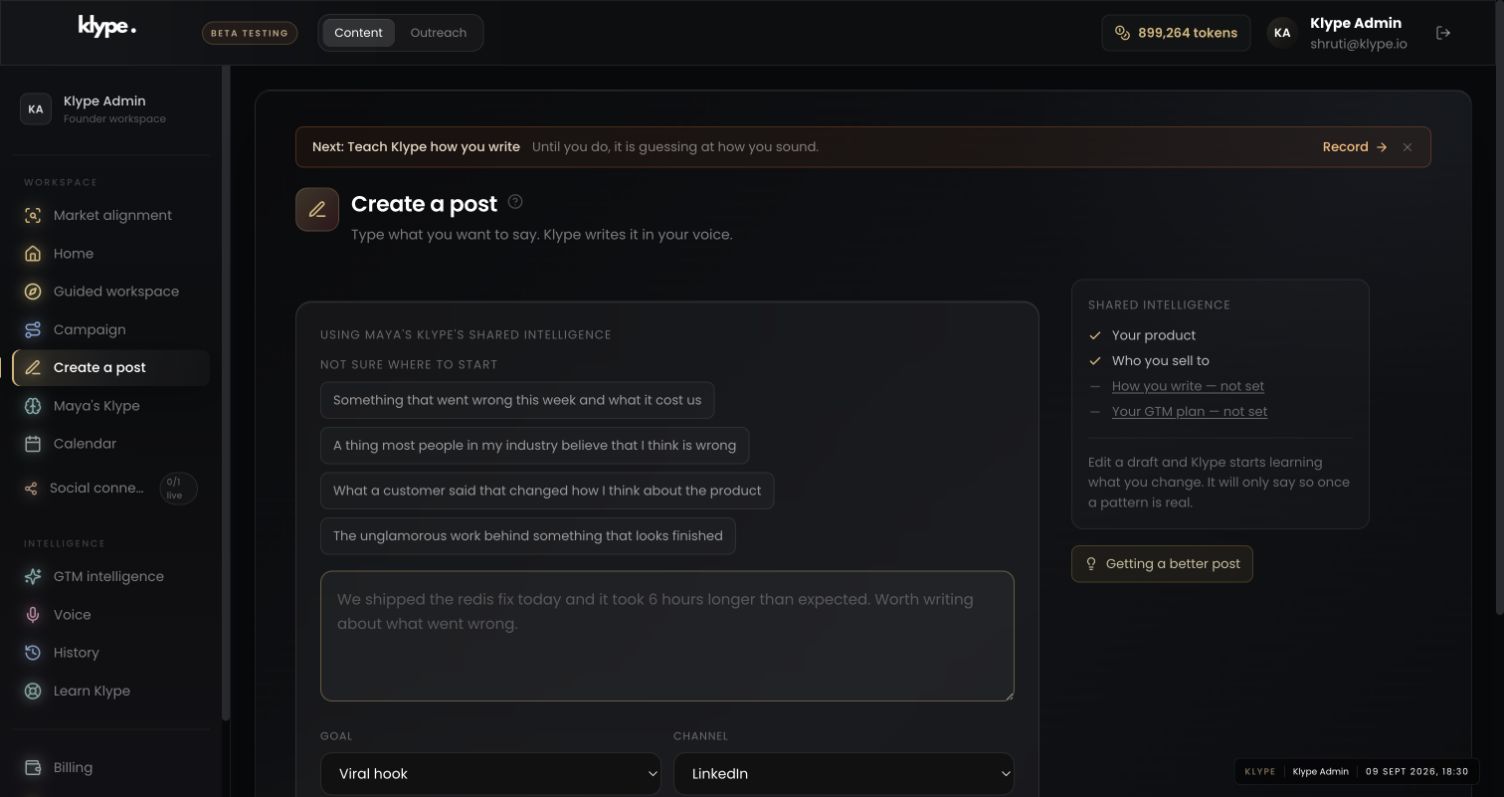
Explain my method for reviewing enquiry handoffs. Use an explicitly hypothetical small service business. Cover ownership, recording the next action and noticing missed replies. Do not imply this is a client case study or add performance improvements.
Replace these example details with your own facts. This is a starting point, not a promise of a particular output.
Separate your method from the client's facts
Write two private lists before drafting. The first contains your general method: questions, criteria and sequence. The second contains client-specific material such as revenue, internal systems and unpublished plans. Build the public post from the first list. Anonymising a name is not enough if the combination of details still identifies the organisation.
Use an example that is openly illustrative
For example: ‘Imagine a small service business that receives enquiries but has no agreed follow-up owner.’ Explain how you would map the handoff and define the next action. Do not add ‘we increased revenue by 40%’ unless that is a genuine, approved and supportable result. A useful example can show reasoning without claiming an outcome.
Store the scope of your work in Klype
Describe the service you provide, who buys it and the problems you help address. In a post brief, specify ‘Explain my method using a hypothetical example; do not imply that this happened to a client.’ Review the draft for accidental first-person case-study language. Saved context reduces repetition, but it does not supply permission to reveal client material.
End with a diagnostic question
A practical ending gives the reader a way to inspect their own situation: ‘Who owns the next action after an enquiry arrives?’ That is more useful than a generic statement about growth. If you offer a next step, say what it involves. Avoid treating every educational post as a request to book a call.
Try it with your own work
Draft a public explanation in four parts: the symptom, the first questions, the decision criteria and the next sensible action. Then ask whether any detail is necessary only because it makes the story seem impressive. Remove that detail if it does not help the reader understand the method.
Review combinations of details, not just names. A location, a date and an unusual operational problem can identify an organisation even after its name disappears. If the example depends on those details, switch to a fully illustrative scenario or obtain the appropriate permission before using real work.
When the result needs work
Paste a LinkedIn draft and the free checker scores it in your browser. Your text stays in your browser.
Check current feature availability and checkout terms in the app.
Common questions
Is changing the client's name enough?
Not necessarily. Dates, circumstances and unusual details can still identify a client. Use only material you are authorised to share.
Can I use hypothetical examples?
Yes. Label them clearly and do not imply that the example produced a real customer result.