 Shruti Kaushik
Use one checked finding as the source for a full article and several channel-specific explanations. Klype can help keep the buyer context consistent across drafts. Distribution still requires available integrations or manual publication, and lead outcomes must be measured.
A source article and four distinct adaptation briefs connected to one useful resource.
- One attributable finding
- A clear audience decision
- A realistic weekly review budget
Why this gets difficult
Copying the same text to every channel looks efficient but often ignores how people encounter it. A visual checklist, a professional explanation and a long article are different reading experiences.
The opposite mistake is inventing a new claim for every format. That creates more review work and can make the brand contradict itself. Keep the evidence stable while changing the way the reader enters the topic.
A practical example to adapt
Post the same growth tips on LinkedIn, X, Instagram and Medium every day.
Explain one checked subscription-page observation: a LinkedIn decision note, a short X takeaway, an Instagram comparison outline and a full article with sources and limitations.
The revised plan creates variety through format and reader context, not through unsupported claims. Every version points back to the same evidence and useful resource.
Follow the workflow, screen by screen
Use these screens as a map, then apply the example to your own workspace. Each step explains what to look for, not just which page to open.
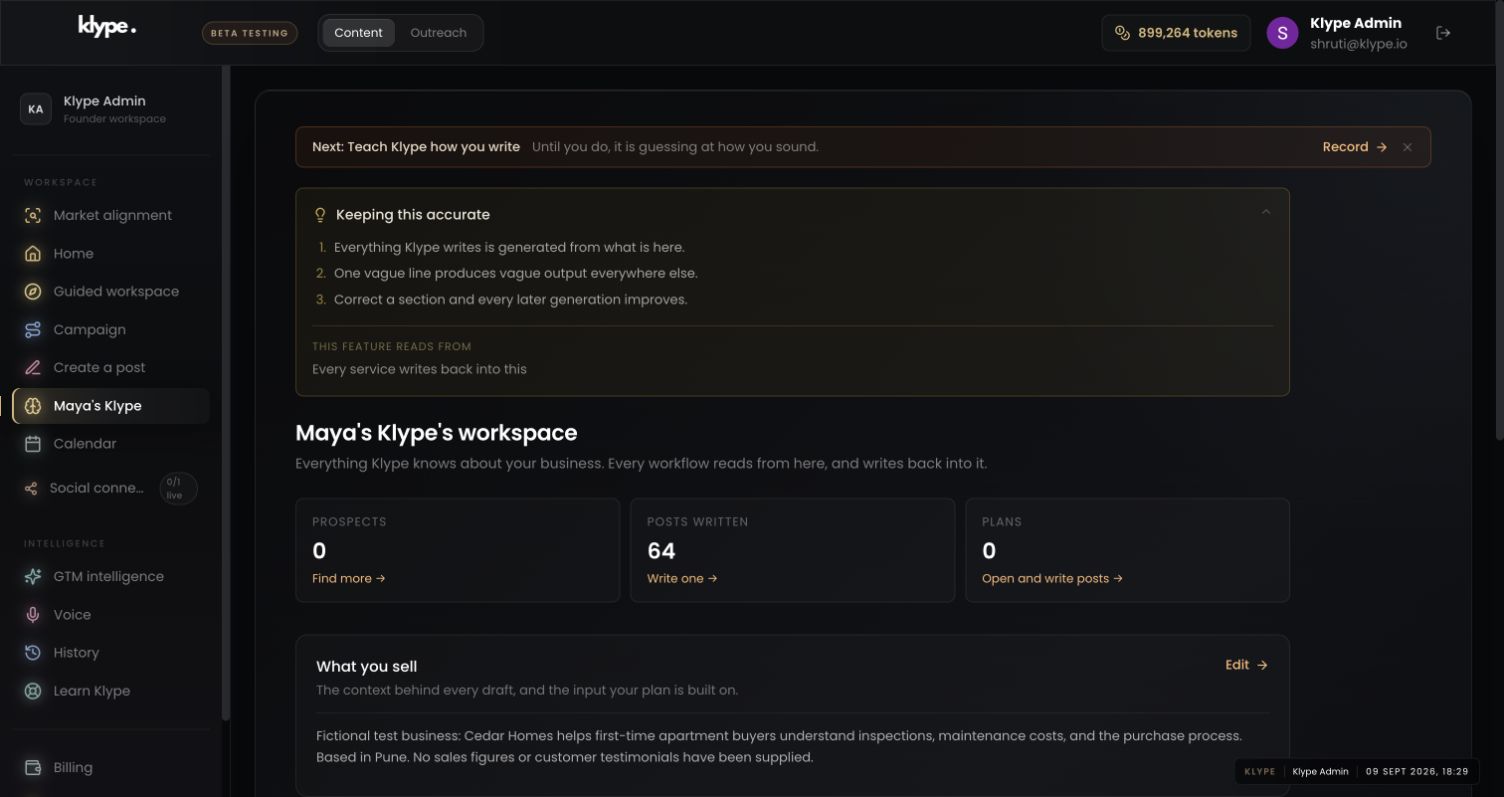
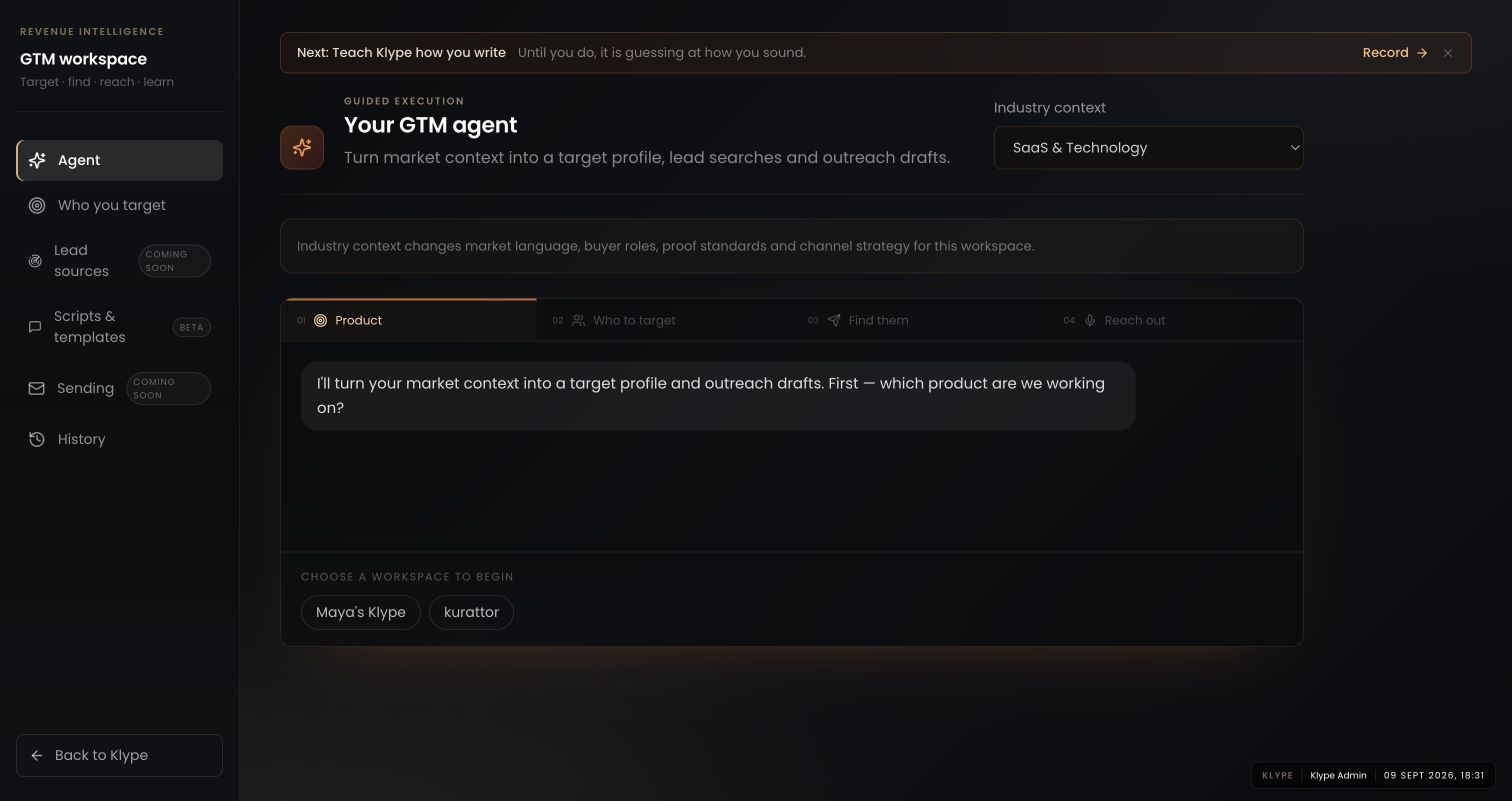
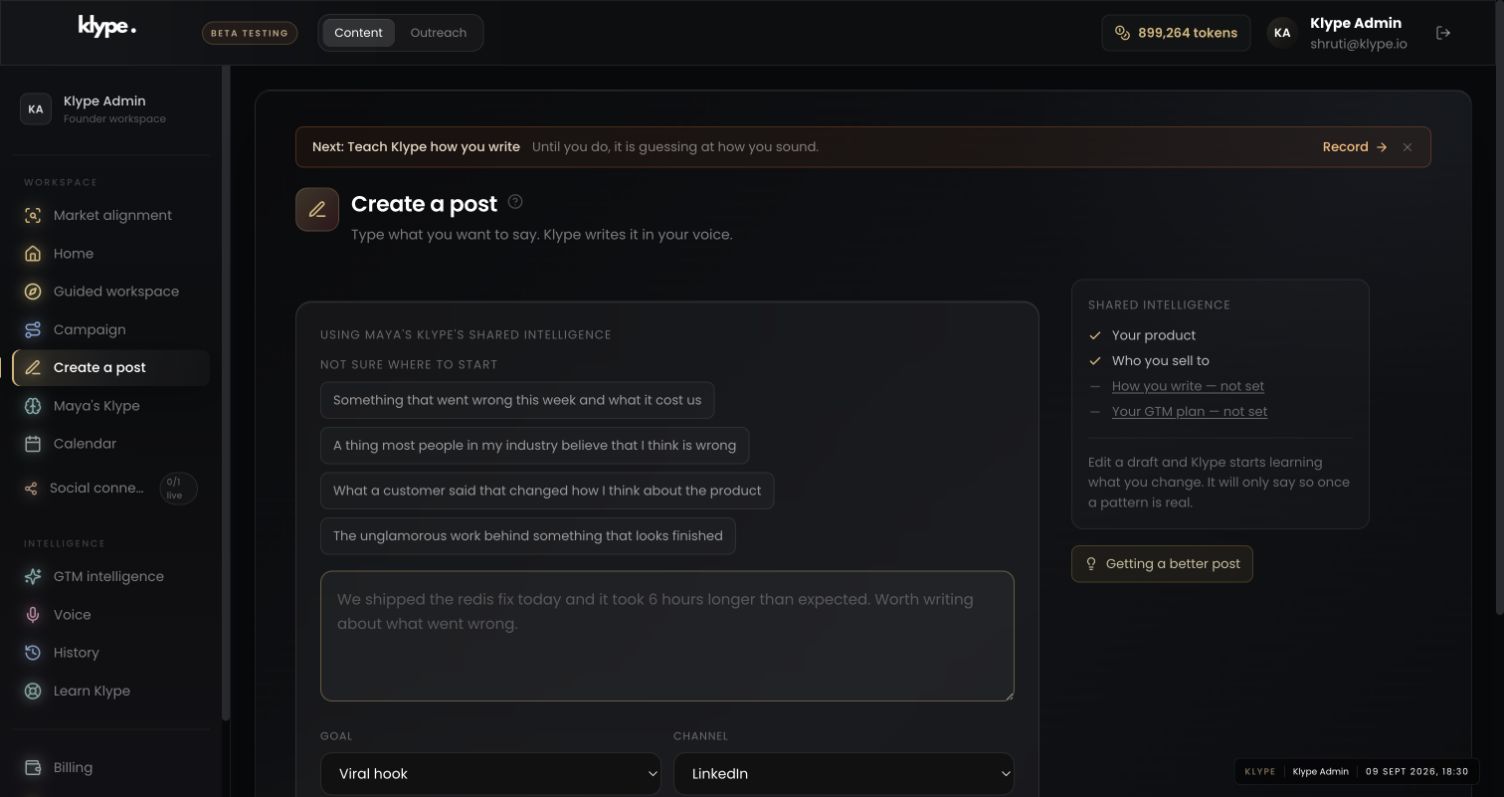
Real product captures from 9 September 2026, using the fictional Maya / Cedar Homes test workspace. These show the interface, not the article’s example being generated. The admin balance is not a plan allowance. Select a screenshot to inspect the full image, including the sidebar.
01Check the business context
Check that the workspace identifies the buyer, not only the industry. The same finding needs different framing for an operator and a founder.
02Connect the idea to a plan
Use the GTM workspace to rank channels and assign a manageable cadence. Do not interpret a recommendation as an activated integration.
03Give the draft one clear job
Generate one channel-specific draft at a time and compare it with the source notes. Check any new numbers, examples or claims before use.
Source finding: [observation and evidence]. Buyer decision: [decision]. Create distinct briefs for LinkedIn, X, Instagram and a long article. Keep the claim and limitation unchanged. State which publication steps are manual. Give each version one appropriate next action.
Replace these example details with your own facts. This is a starting point, not a promise of a particular output.
Choose the finding before choosing the format
Start with a checked observation that helps someone make a decision. A useful finding might concern a confusing comparison, a repeated question or a gap between what a service promises and what a buyer needs explained. Write the source, date and limitation beside it. Do not let a dramatic hook turn a small observation into a universal rule. In Klype, keep the source notes with the brief and use the saved business context to explain why this matters to your audience. If you have no finding yet, publish a clearly labelled question or method rather than presenting a proposed study as completed work.
Write the full explanation once
Before making short posts, write a concise source article or report. Include the question, method, observation, limits and next action. This becomes the reference for the shorter pieces. It also gives interested readers somewhere to go beyond a hook. The long article should answer the question directly near the top, use descriptive headings and link to the evidence. It does not need to repeat a keyword in every paragraph. A useful article is easier to cite when the reader can distinguish what you found from what you recommend. Keep the full explanation available in readable HTML or another accessible format.
Give each channel a different entry point
For LinkedIn, explain the professional decision and its trade-off. For X, use one concise observation and a link or short sequence if the topic needs context. For Instagram, plan a visual comparison or checklist rather than shrinking a dense report into unreadable slides. For Medium, adapt the full explanation for readers who may not know your business. These are editorial choices, not a guarantee that every channel fits your buyer. Klype can help draft channel-aware versions, but confirm what is supported in your account. Medium publication and any unsupported channel workflow remain manual; a plan mentioning a channel is not a publishing connection.
Use an invitation that matches the asset
A short post should give some value before asking the reader to leave the platform. Offer the fuller report when it adds detail that the post cannot reasonably contain. Avoid “comment YES” as a reflex when a direct link would serve the reader better. If someone asks for the resource, deliver it promptly and explain what it covers. Do not add them to a newsletter merely because they requested a document. Keep marketing consent clear and separate. A good next step can be a question, a checklist or an invitation to compare a situation, not always a sales call.
Choose a cadence your review capacity can support
One checked study and one useful article can be more valuable than several shallow case studies. If you have six hours a week, allocate time to collecting evidence, reviewing the output, distributing it and answering people. Repurposing reduces rewriting, but it does not remove those tasks. Start with the channel where you can identify relevant readers and add another only when it has a distinct role. A plan with ten potential channels should rank most of them as later options, not assign ten simultaneous publishing schedules. Sustainable content leaves room for the conversations it is meant to create.
Measure which explanation brings the right people
Use distinct source tags on links when your analytics setup supports them, and record the asset mentioned in direct conversations. Compare relevant visits, resource requests, qualified replies and paid next steps. Do not declare a channel ineffective solely because it produces fewer impressions. A small article that attracts three appropriate buyers may be more useful than a broadly shared post among peers. Read what people ask after consuming the content. Their questions reveal whether the explanation is doing its job. Feed those questions back into Klype’s business context or your next brief, while keeping the original research and its limitations intact.
Try it with your own work
Write a one-sentence finding and one-sentence limitation. Place both beside every adaptation while reviewing it. If a short version becomes misleading without the limitation, change the hook rather than dropping the context.
Publish through your available workflow and keep a simple record of where each version went. Review meaningful questions and resource requests after a defined period; do not optimise only for likes.
When the result needs work
Paste a LinkedIn draft and the free checker scores it in your browser. Your text stays in your browser.
Check current feature availability and checkout terms in the app.
Common questions
Does Klype automatically publish to Medium?
Do not assume that. Treat Medium publication as manual unless your account explicitly provides and verifies that connection.
Are two or three case studies a week necessary?
No. Match cadence to evidence and review capacity. A proposed study is not a completed case study.